Blog
Running a lab without the paper, the status calls and the Monday pile-up
Practical guides and stories on sample intake, chain of custody, client communication and invoicing, for lab owners, managers, and the teams who run client-facing labs.
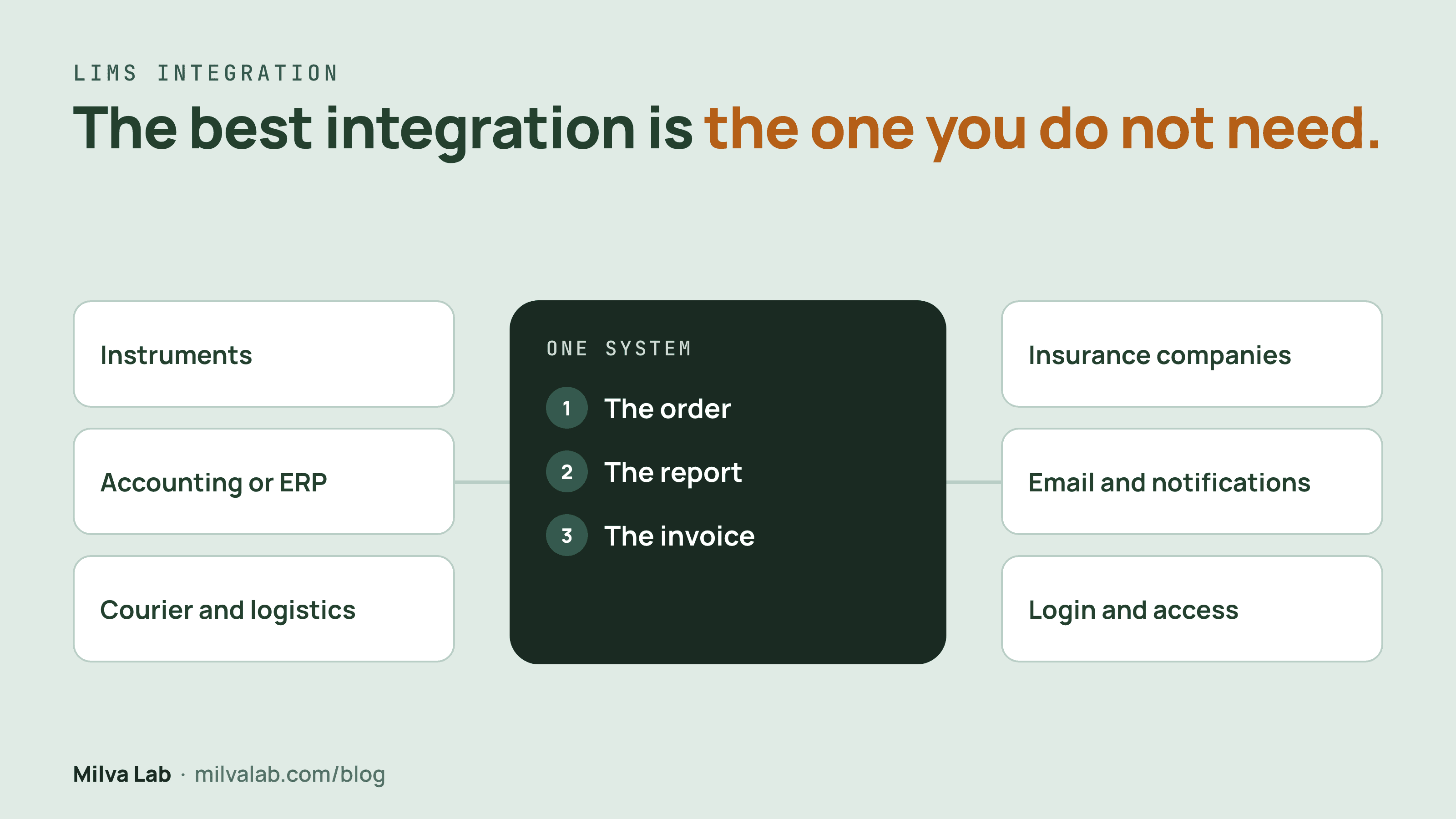
LIMS integration: what to connect and what to ask before you buy
What to connect, which integrations you can skip, and what to ask a vendor.
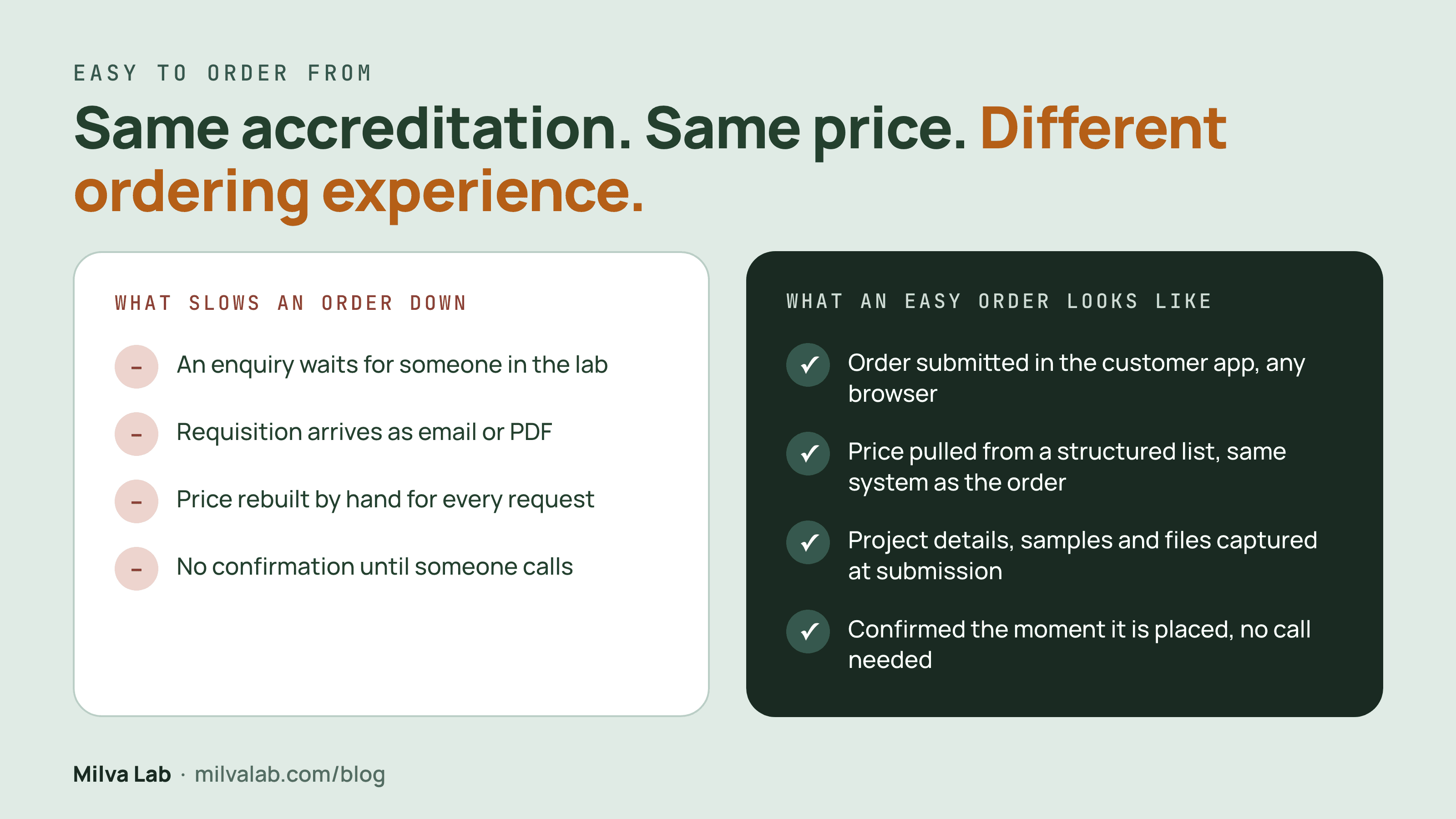
What makes a lab easy to order from?
Clients decide who gets the repeat job long before the invoice. It starts at the order.
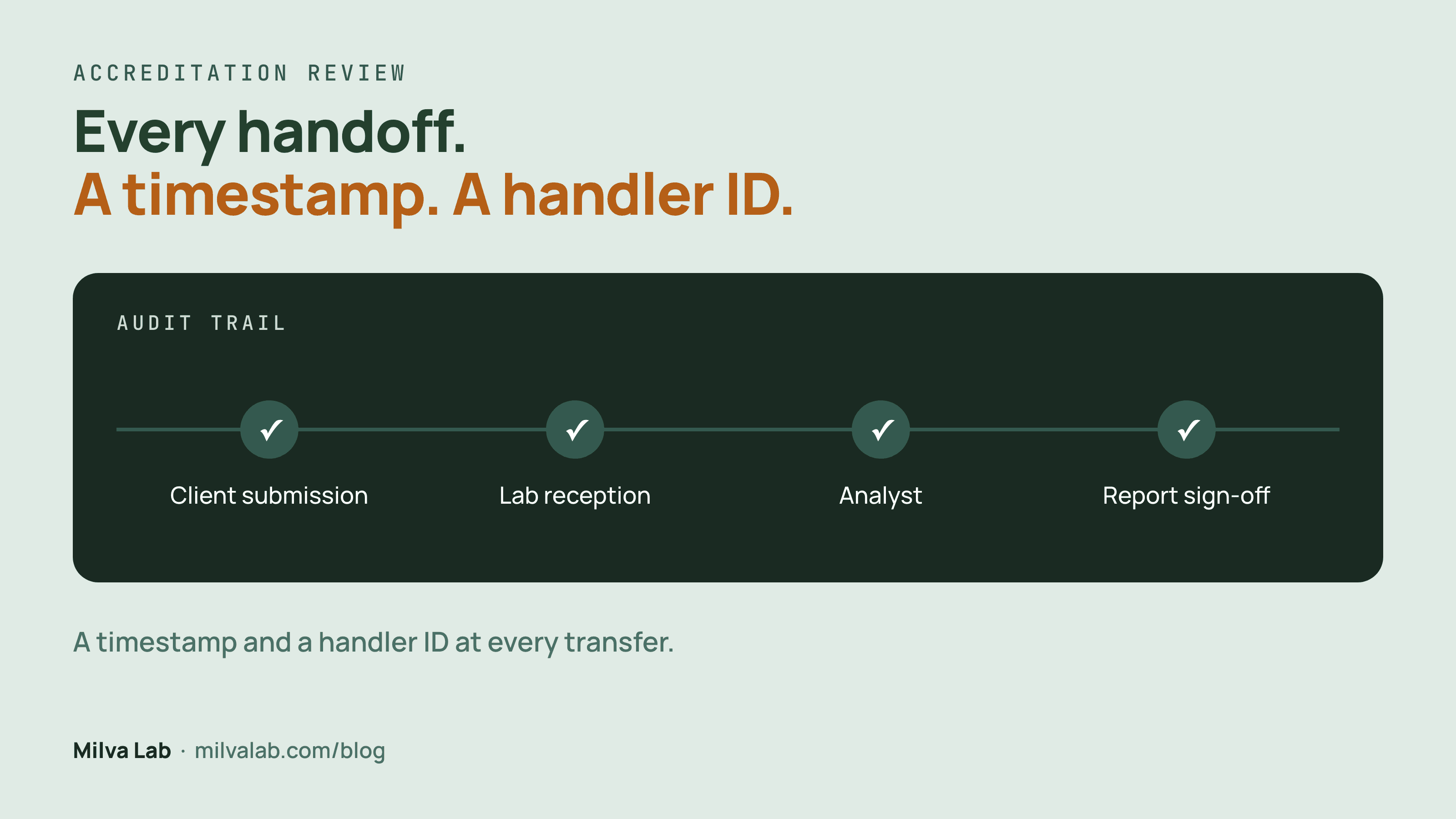
What does an accreditation auditor actually ask for?
The record a reviewer wants, and how to have it ready before the question comes instead of the night before.
Sample manager LIMS: what it does and what to compare
The sample lifecycle in a LIMS, and what to compare in sample management.
LIMS software for asbestos testing labs: what to look for
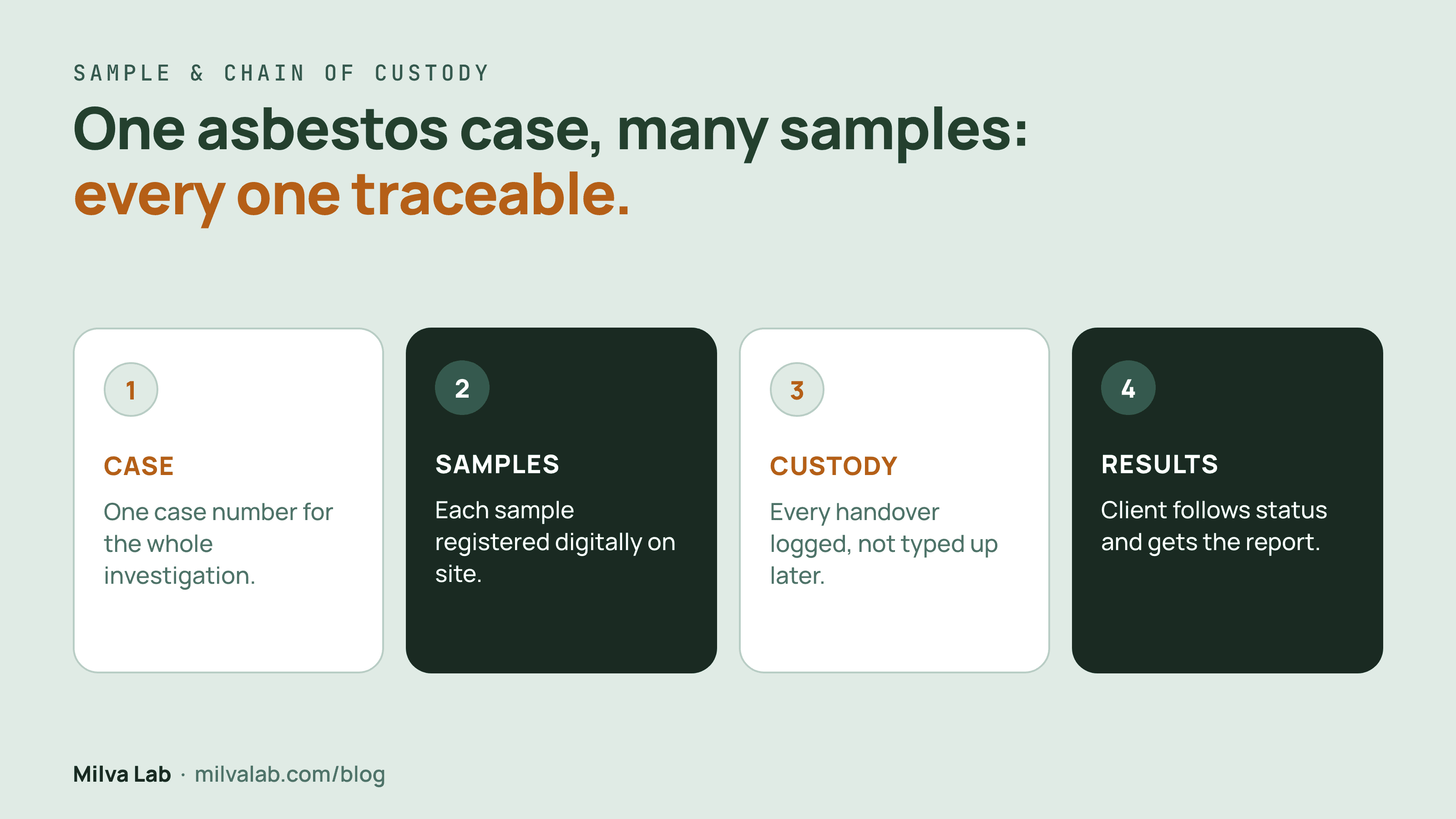
An asbestos investigation is many samples, one deadline and a client waiting for an answer. Here is what a LIMS has to handle for that to work without paperwork.
How to choose a LIMS for an environmental or building testing lab: a buyer's checklist
Ten questions that separate a system built for your lab from a generic one.
How long does it take to go live on a new LIMS?
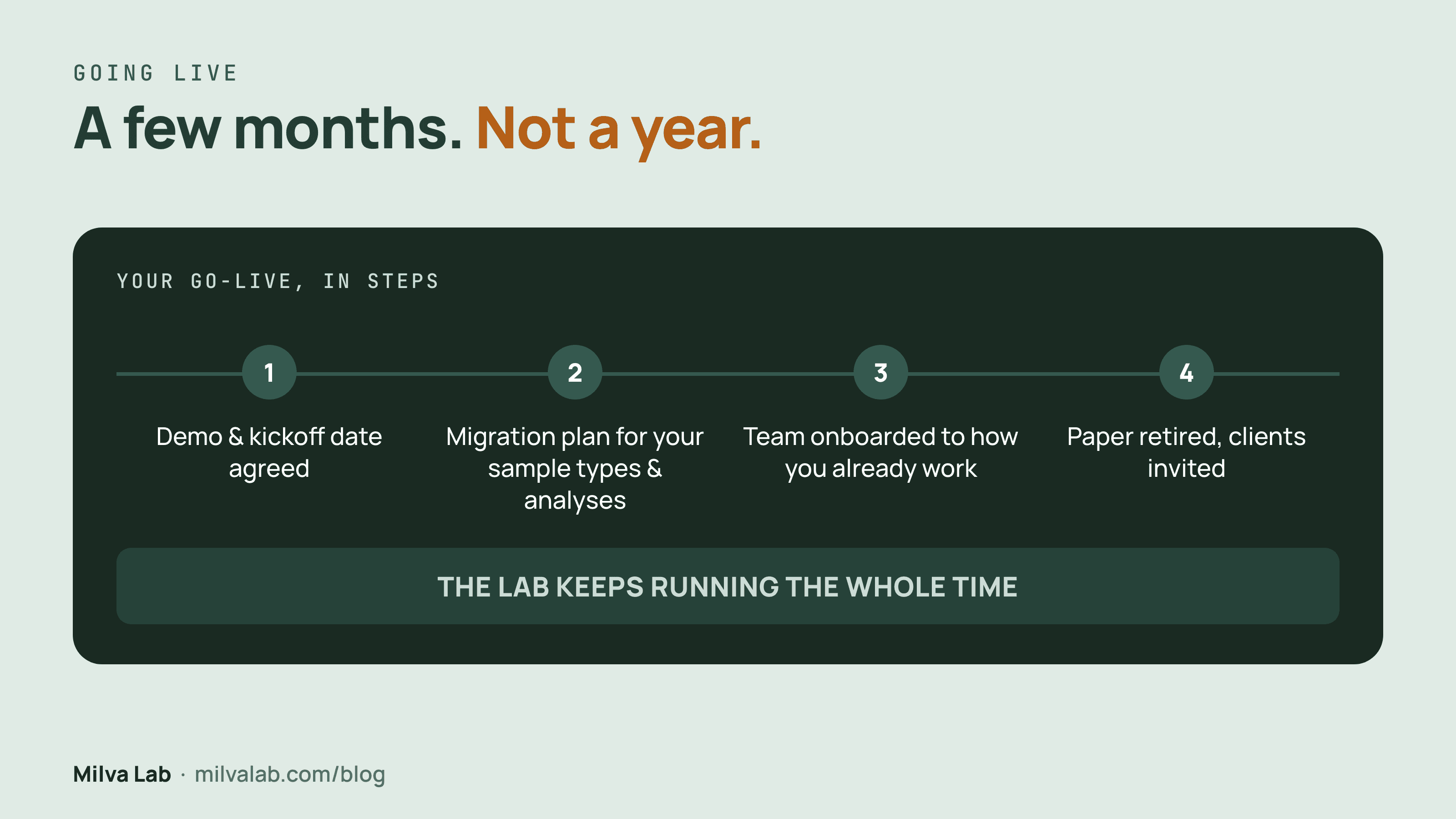
What actually happens between booking a demo and running your lab on Milva Lab, done in steps, without pausing operations.
LIMS partner vs vendor: why your LIMS should help you grow
Six signs of a commercial LIMS partner, and what to ask before you sign.
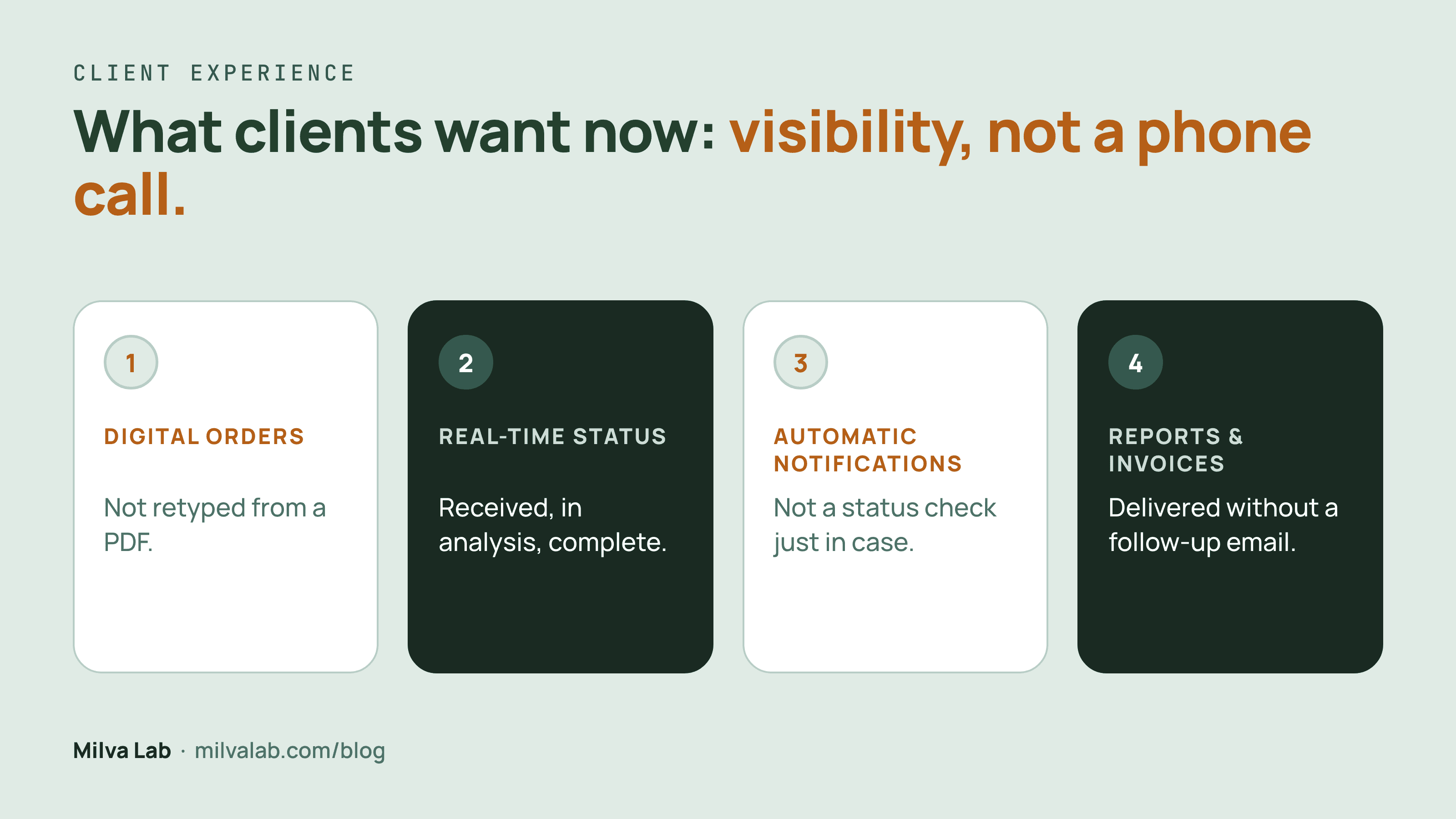
What lab clients are actually asking for in 2026
A look at how client expectations have shifted for environmental and building-investigation labs, and what meeting them actually requires.
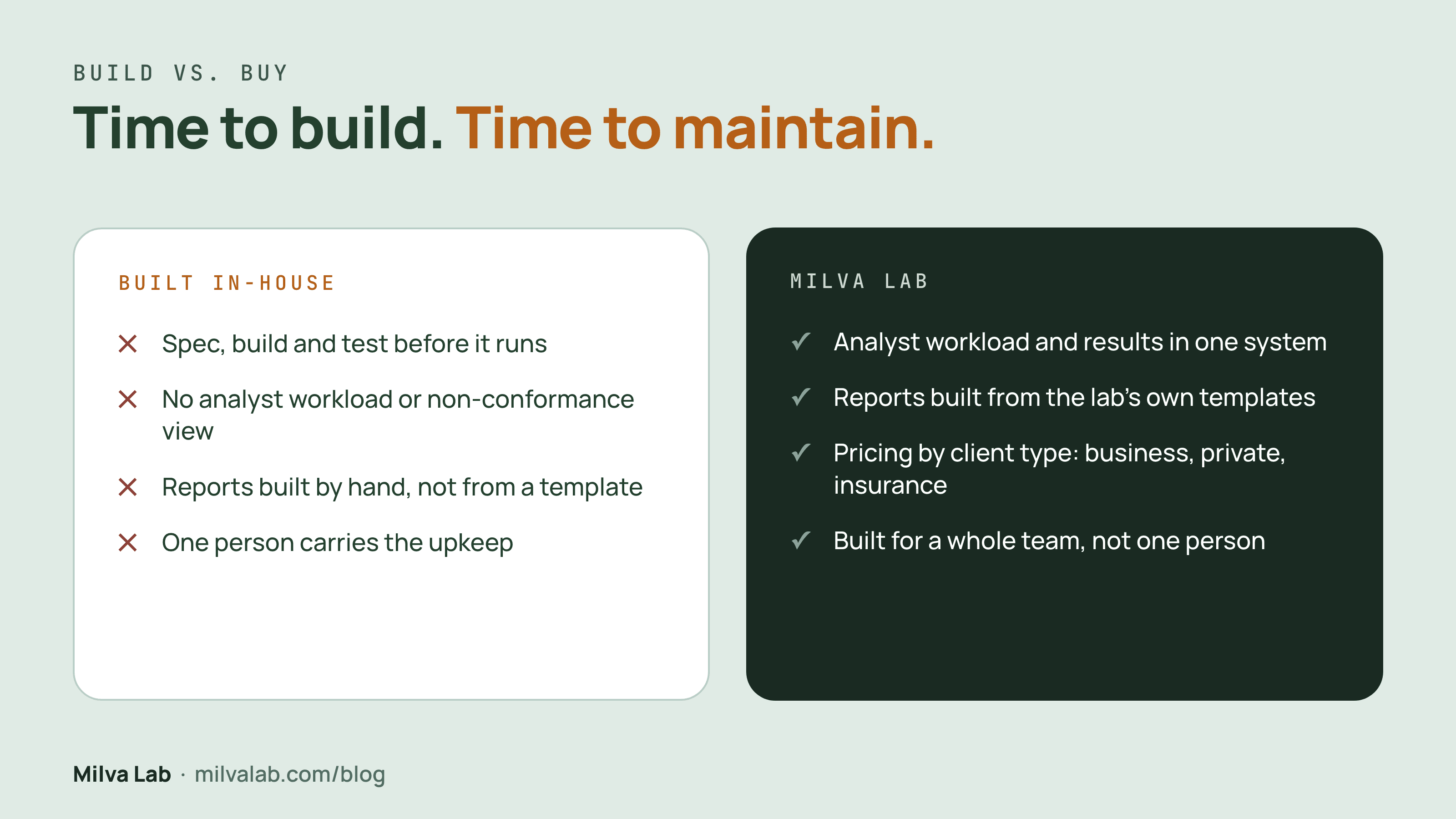
Should a testing lab build its own LIMS, or buy one?
Building a LIMS in-house, even with AI tools, still means specifying, building and testing it before it runs a single sample, time your team is not spending on the lab. Here is what that actually costs, and what a purpose-built system gives a lab instead.
Turnaround time SLAs: how labs actually hit them
Most missed deadlines are not an analysis problem. They are a visibility problem.
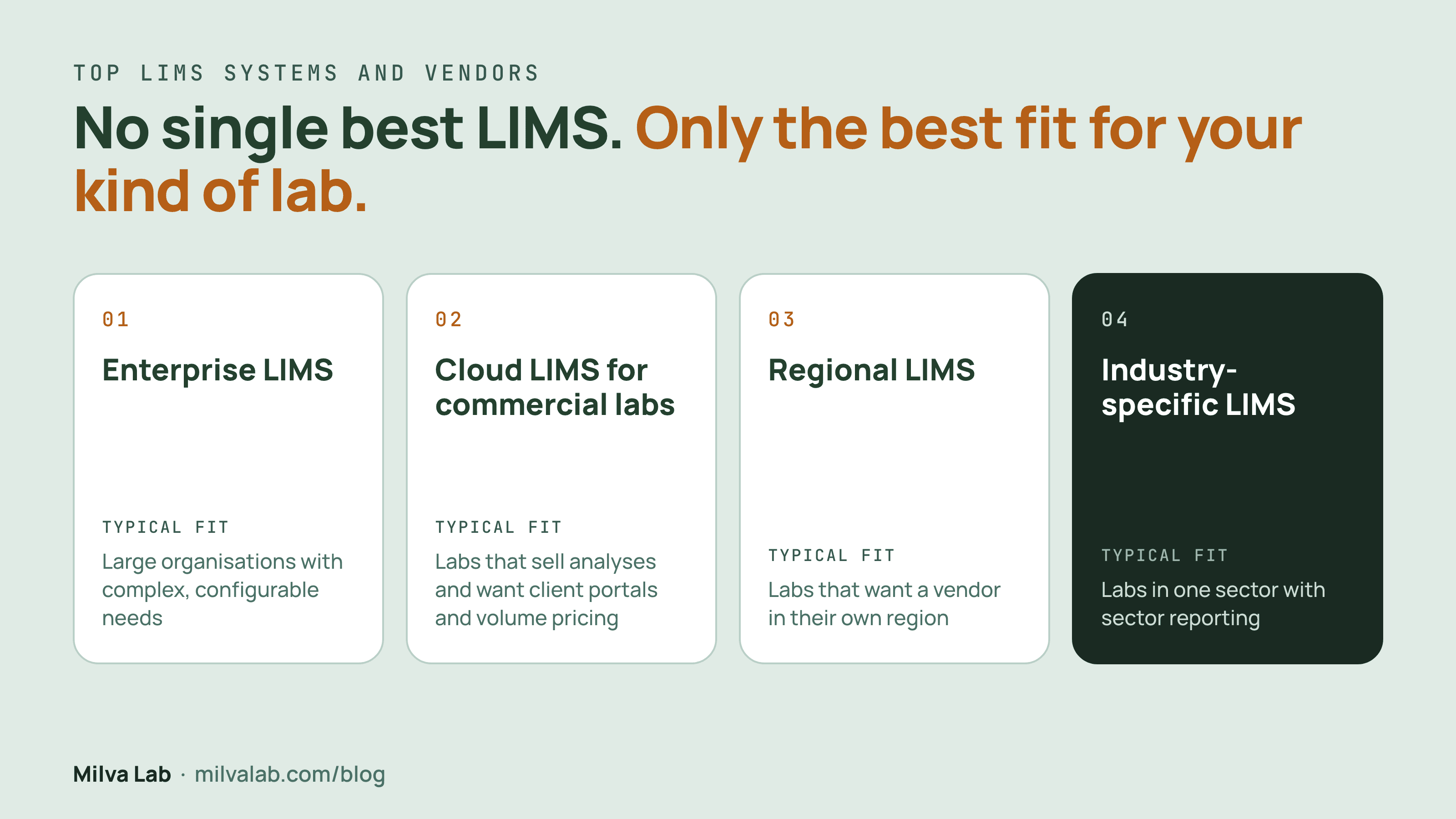
Top LIMS systems and vendors: how to build your shortlist in 2026
The main types of LIMS system, which labs each fits, and seven criteria for a shortlist.
SaaS LIMS: what it is and why labs are moving to the cloud
How a cloud LIMS differs from on-premise, and what to check before you choose one.
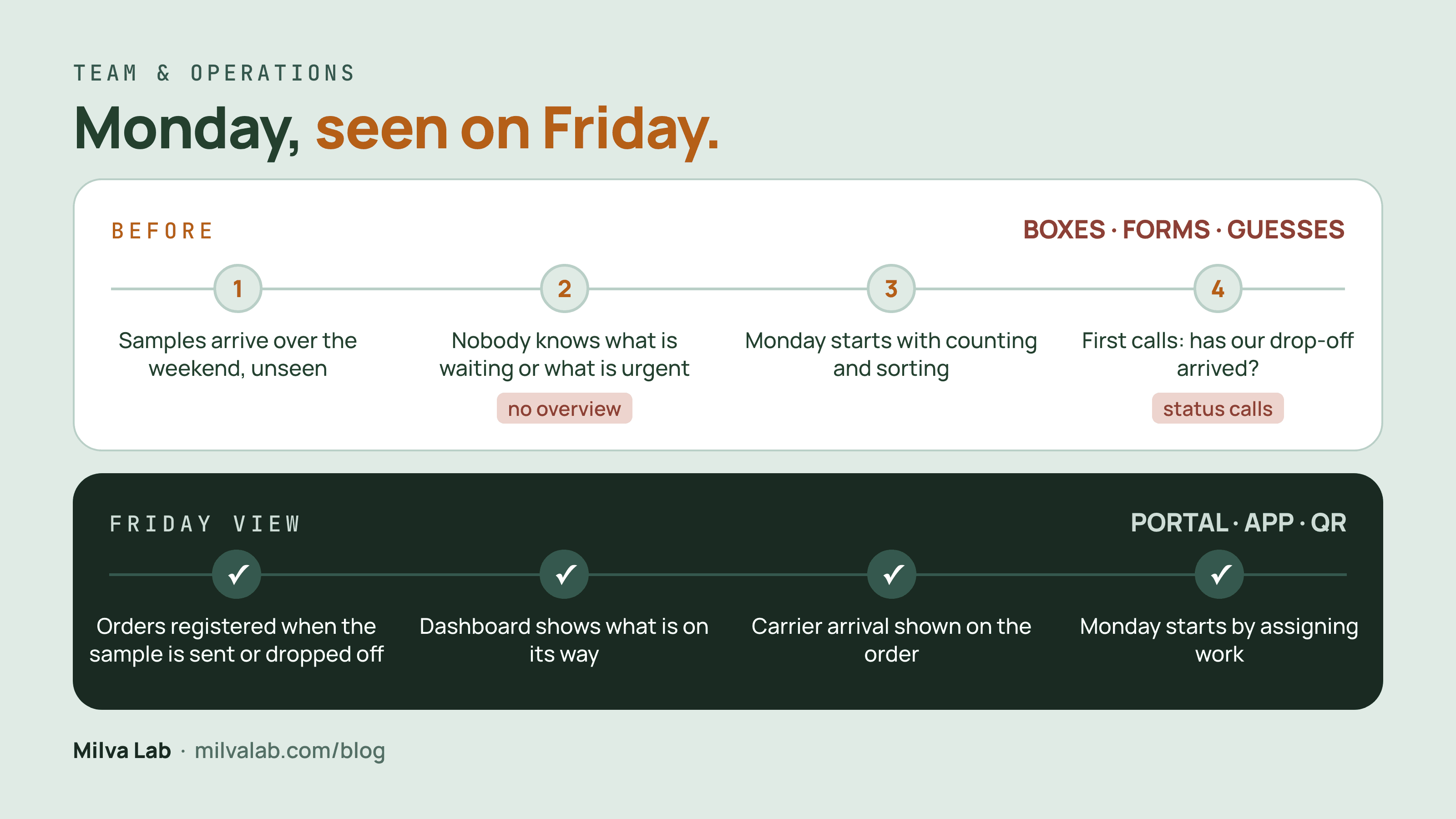
The Monday avalanche: what arrives over the weekend and how to see it before it lands
The samples are not the problem. Not knowing what is coming is.
How a lab registers a received sample, from the box to the clock
Receiving is the moment a sample becomes the lab's responsibility. The record should show it.
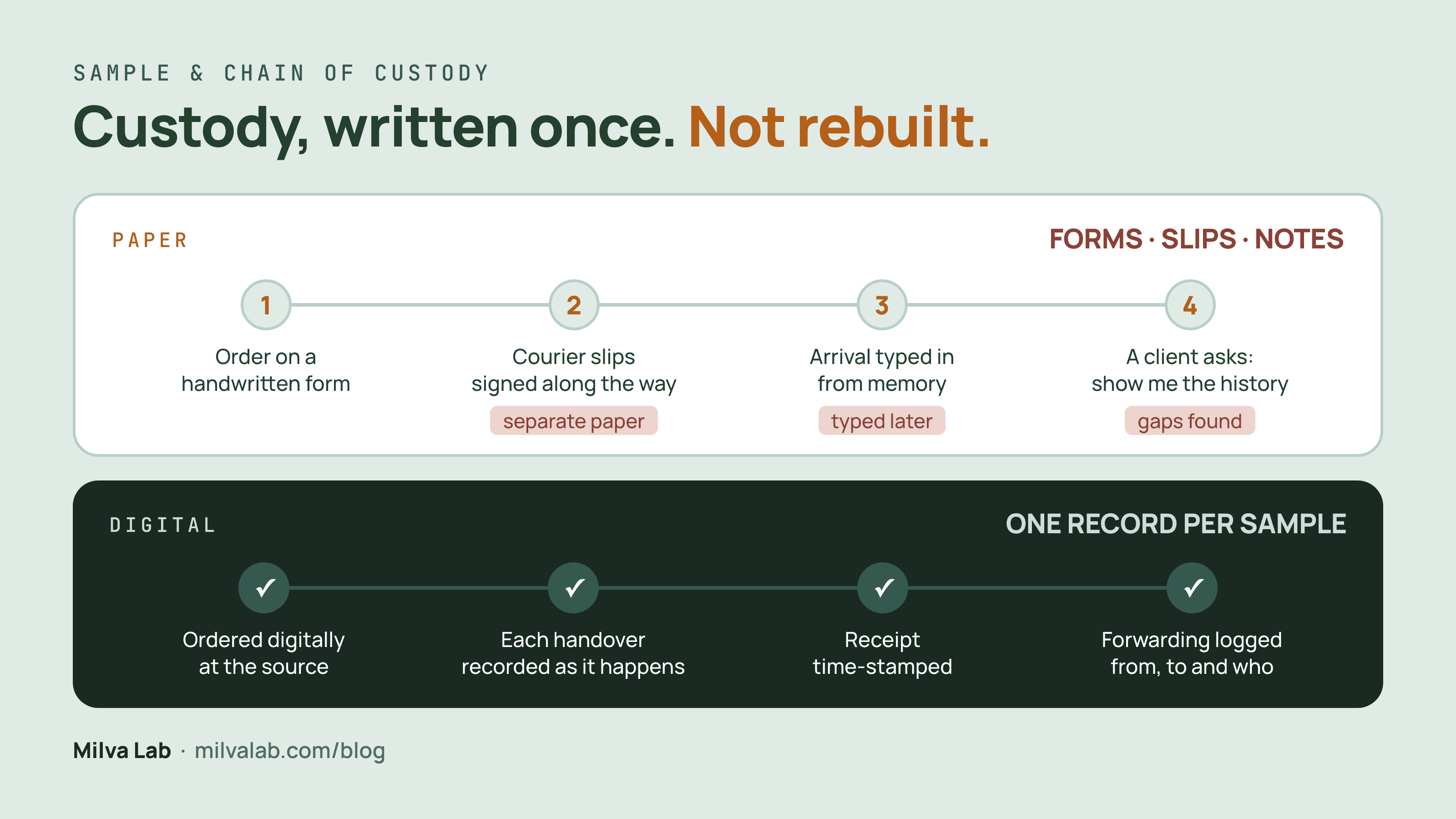
Chain of custody software: what a testing lab should expect
Custody should be recorded when it changes hands, not reconstructed when someone asks.
LIMS pricing: what a LIMS really costs and how to compare quotes
The cost lines to ask about, the main pricing models, and how to compare two quotes.

A lab with more than one site: how to forward samples without losing track of them
When one site cannot analyse a sample, the sample should move on in the system, not just in a van.
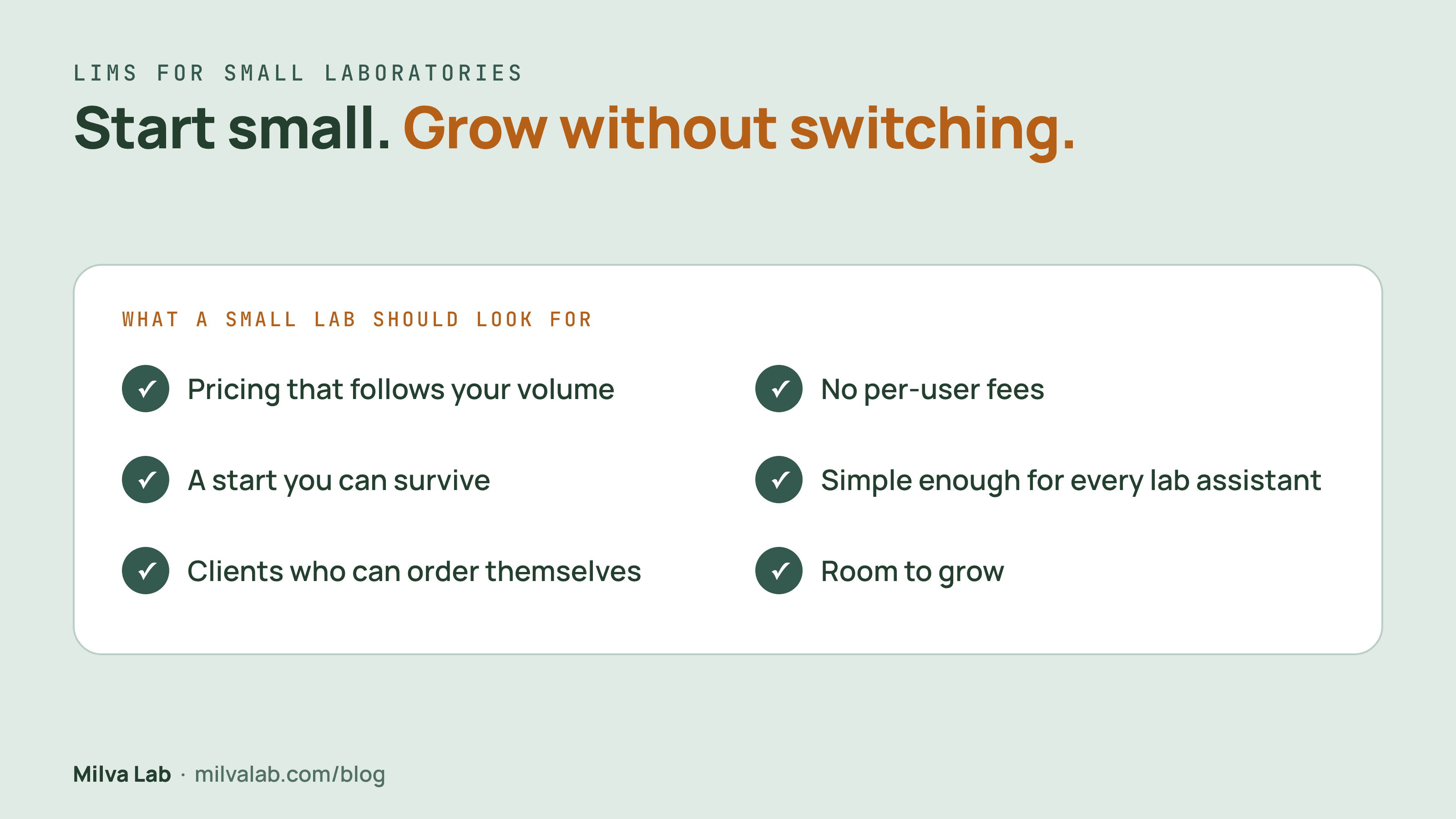
LIMS for small laboratories: start small, grow without switching
When a small lab is ready for a LIMS, and what to look for in one.

What a complete requisition contains, and why gaps start chain of custody wrong
The chain of custody is only as good as its first entry.
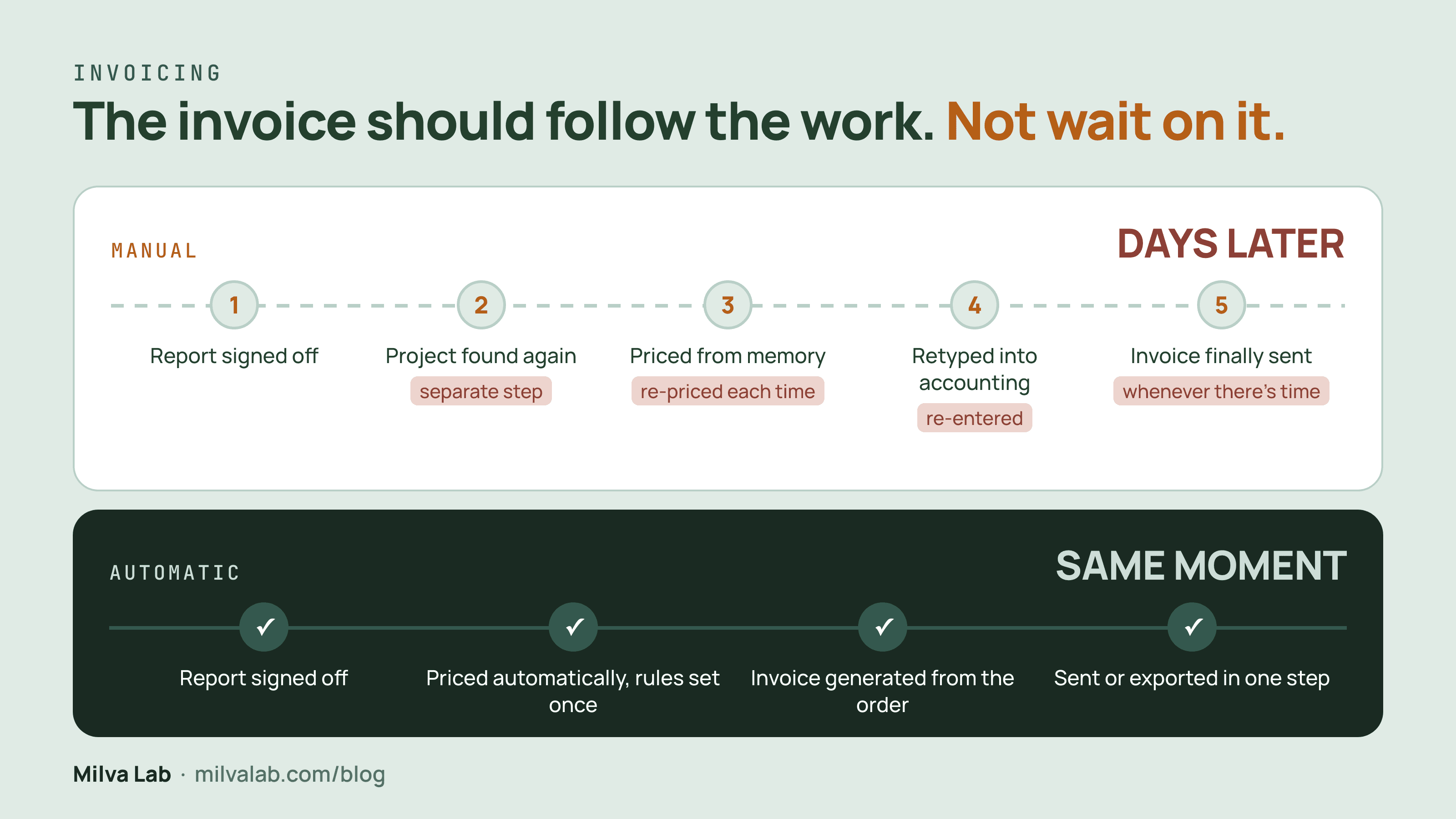
The real cost of manual invoicing in a testing lab
The invoice is rarely the problem. The gap between finishing the work and getting paid for it is.
Benefits of a LIMS: 9 advantages for your lab
Traceability and fewer errors inside the lab, and clients who order and follow their samples outside it.
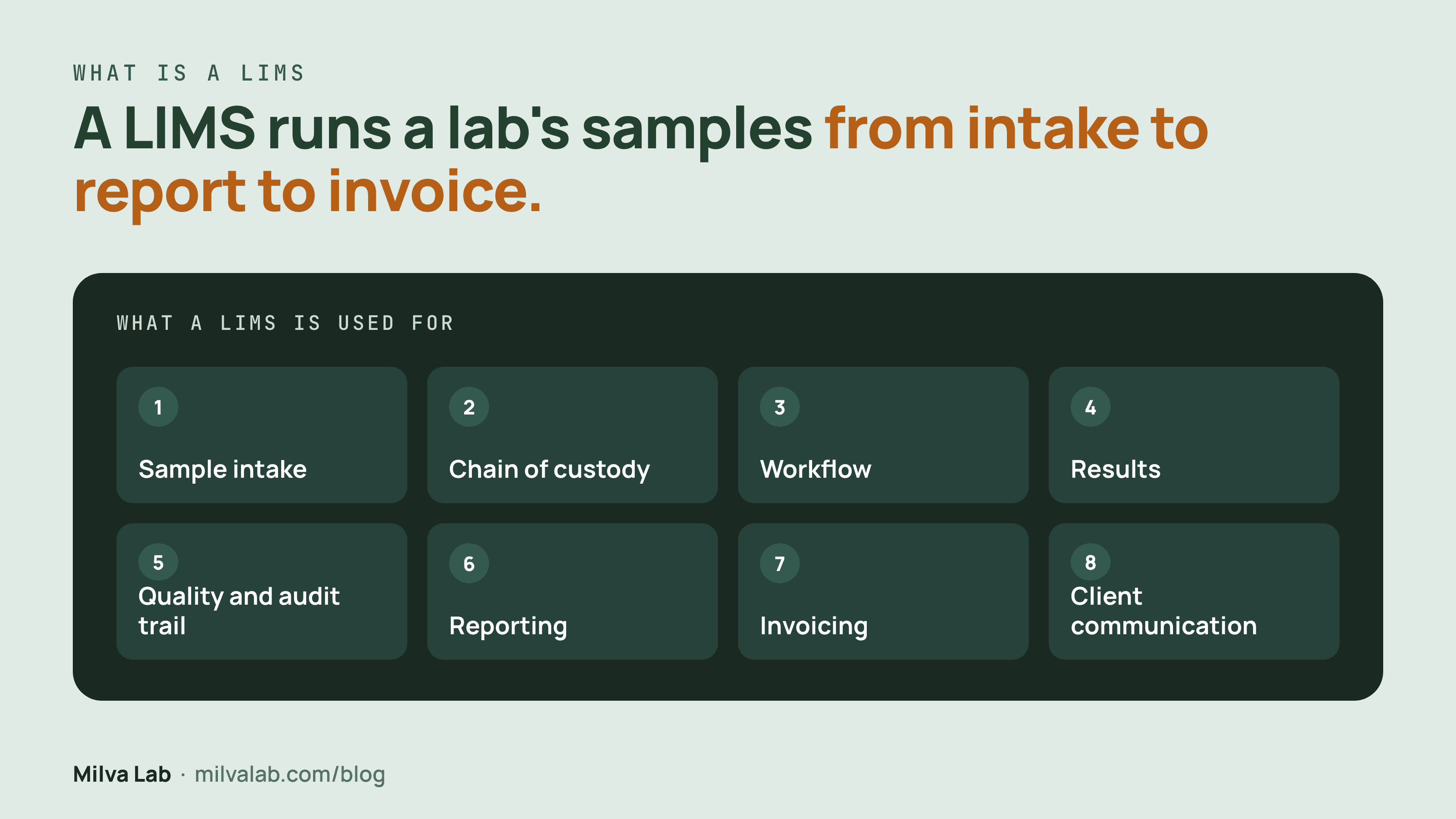
What is a LIMS? Meaning, uses and where LIMS is going
What a LIMS is, what labs use it for, and how to choose one.
How a LIMS calculates delivery dates: working days, closed days and rush orders
A delivery date a client can trust has to be counted from real working days, not from a calendar on someone's wall.
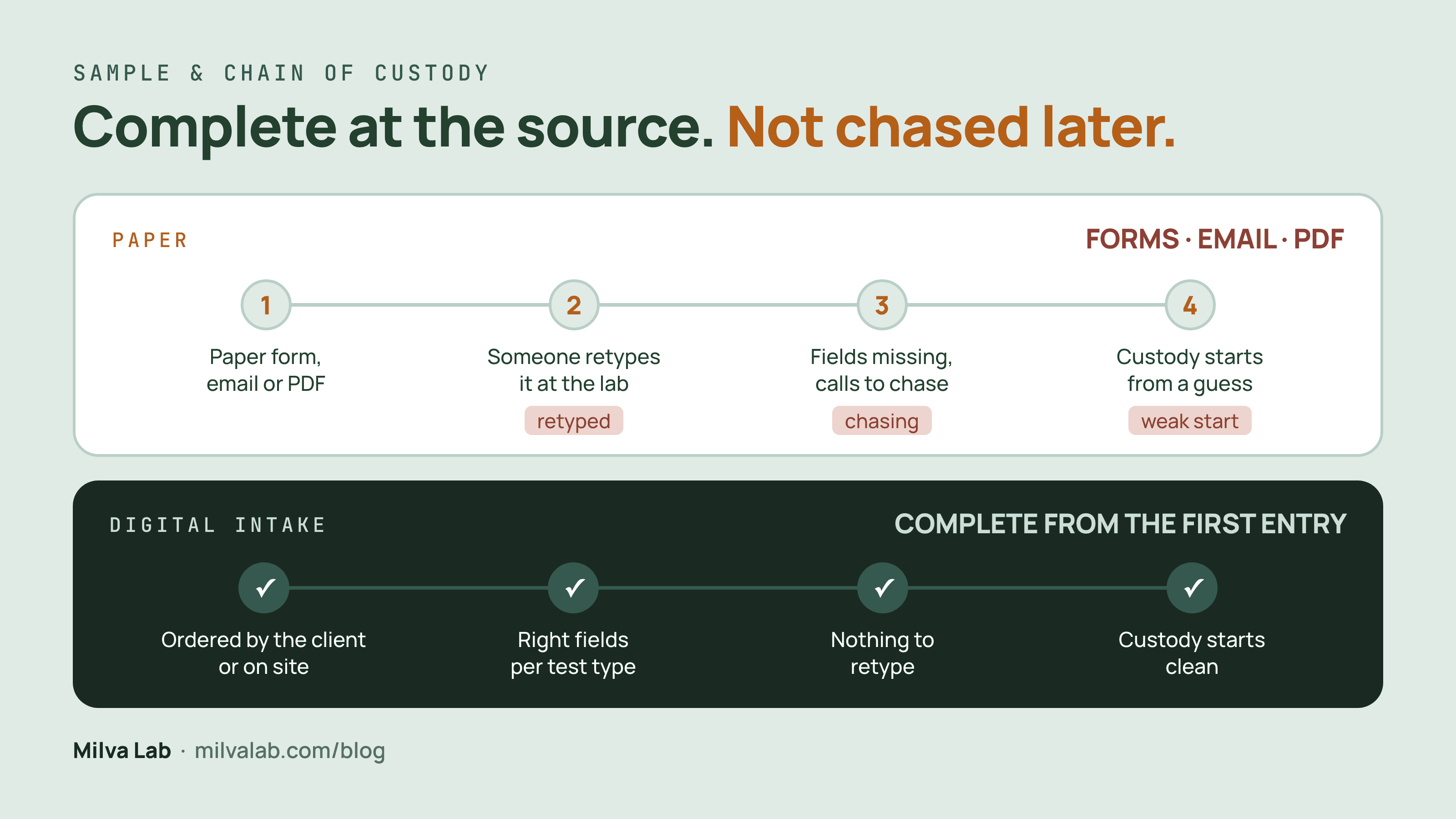
Digital sample intake: what changes on day one
A practical look at what actually changes when a lab stops taking orders by paper, email or PDF, and starts receiving them digitally.
LIMS or Excel: when the spreadsheet stops working
Excel is not the problem. The problem is what happens when five people and a stack of paper depend on it.
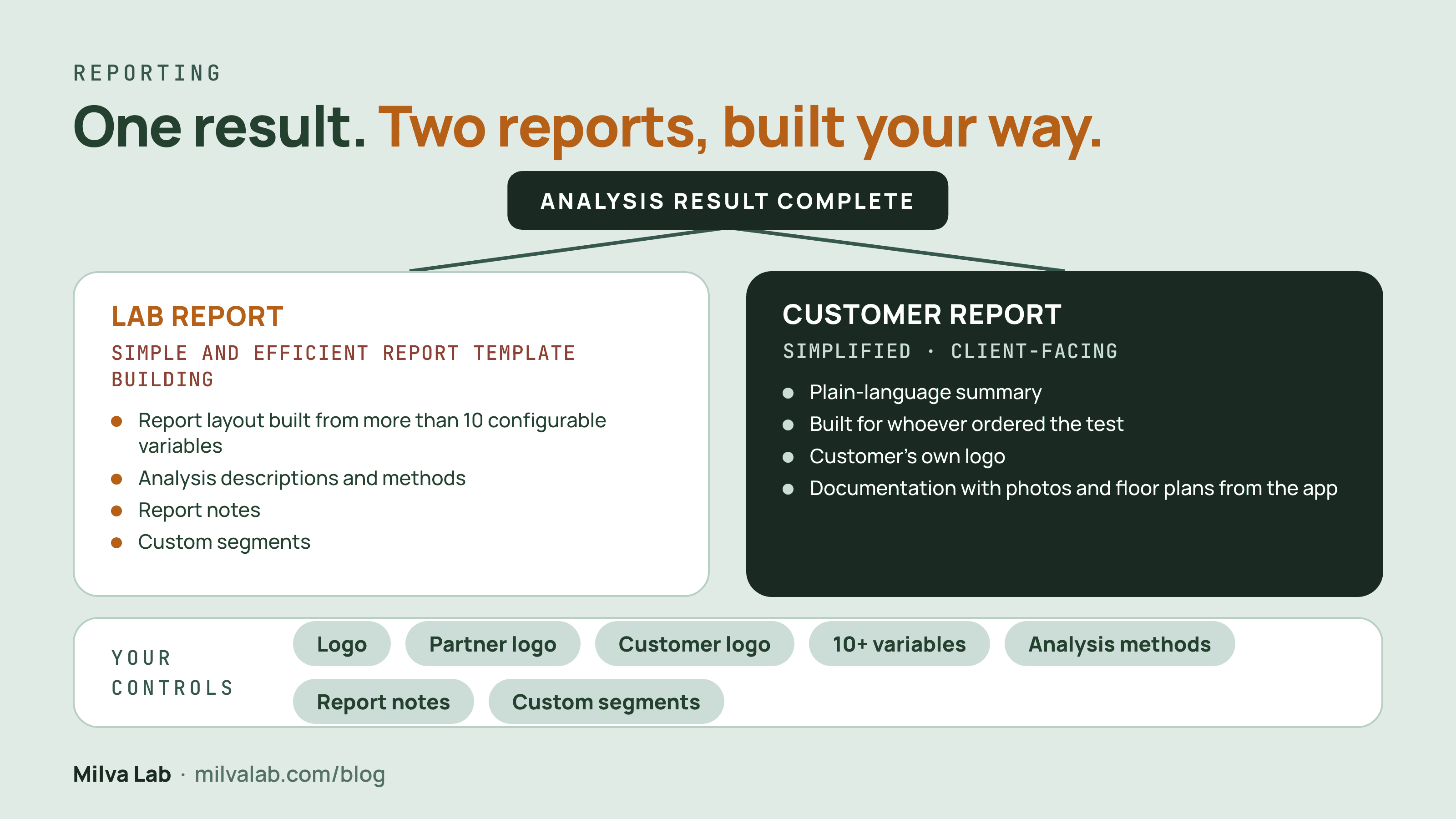
Customizable lab reports: what you actually control
A look at how a lab's own report templates control branding, naming and supporting documents, for both the technical lab report and the simplified customer report.
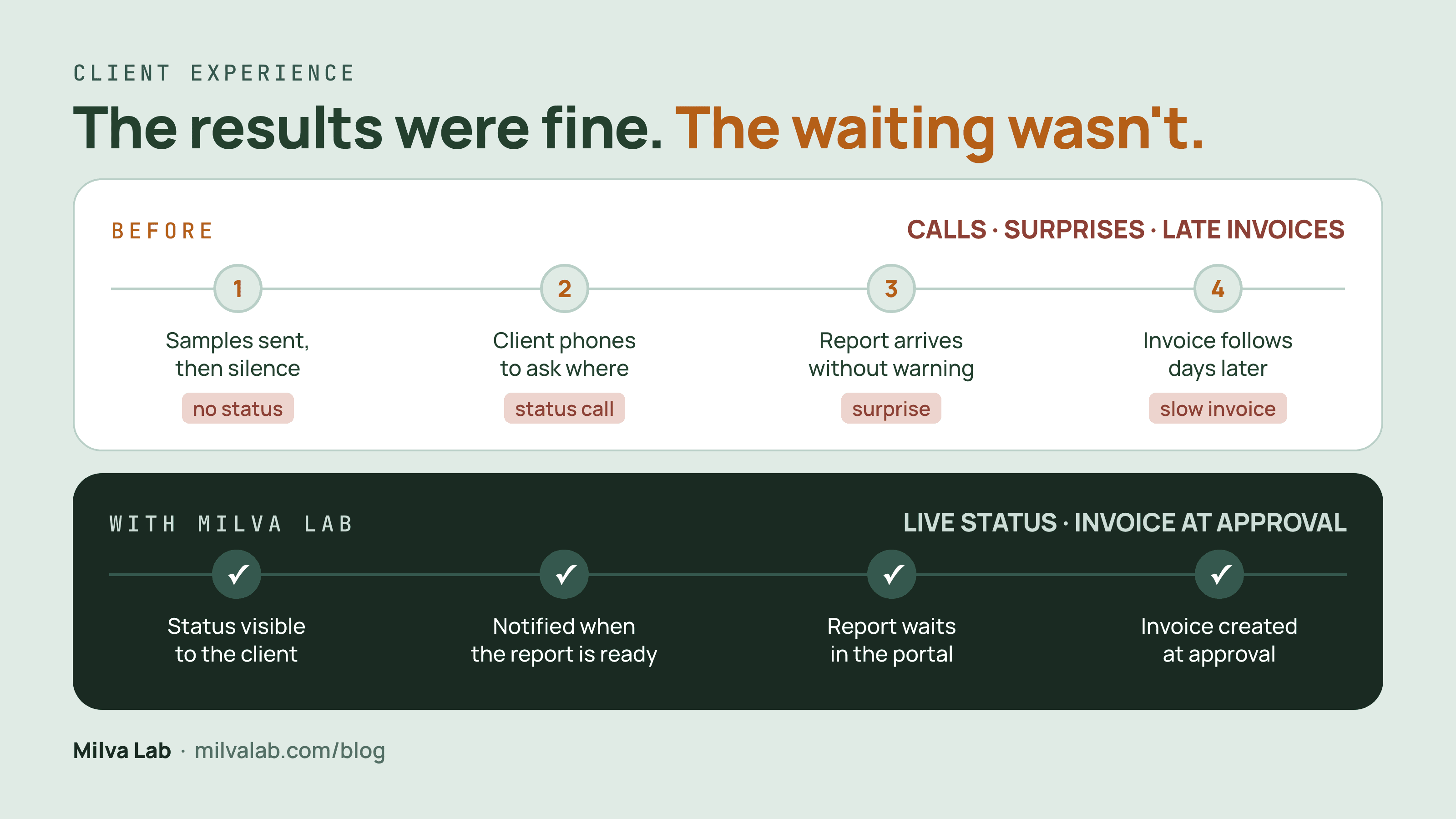
Why labs lose clients over status calls and slow invoices
The results are right. The relationship still wears down, one status call and one late invoice at a time.
What a customer portal actually saves a lab in phone calls and email
A look at what actually disappears from a lab's day once clients can check status without calling.
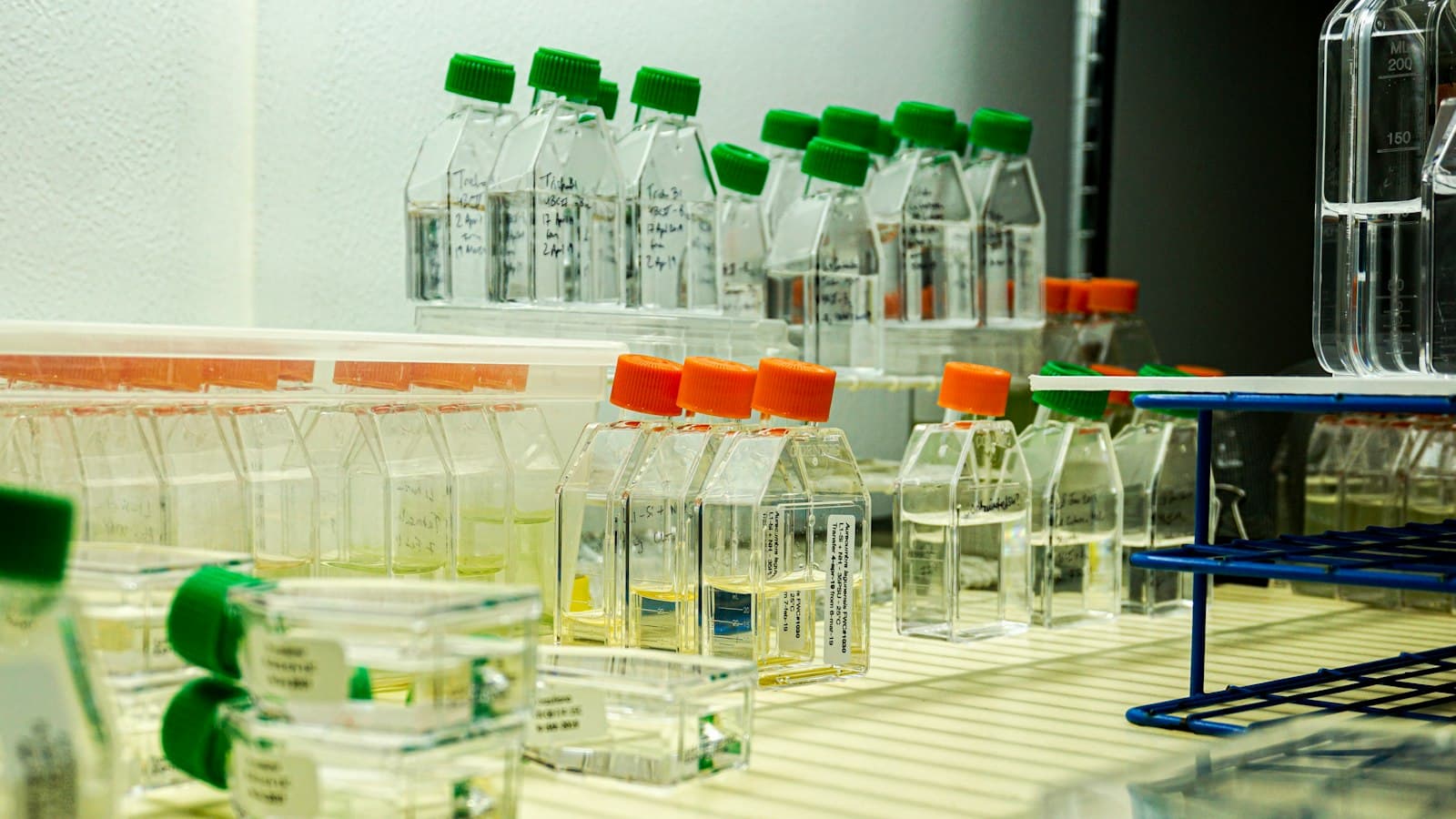
How long should chain of custody documentation take?
A practical look at what slows chain of custody down, and what a same-day standard actually requires.