
Blog
Team & Operations
A lab's workload rarely arrives evenly. Monday brings the pile of samples from the weekend, and the team spends the week catching up on registration, follow-up and invoicing. These guides look at how lab teams organise the work, forward samples between sites, and cut manual paperwork so that field investigators, technicians and admin staff spend less time on handovers and more time on the work they were hired to do. Each article starts from a situation you will recognise from your own lab.
What this section covers
The articles here deal with the running of the lab: the Monday pile-up, turnaround time SLAs, samples forwarded between sites, the cost of manual invoicing, and the choice between Excel, building your own system and buying a LIMS. Several look at what a move to a new system involves, including how long it takes to go live and how to compare options with a buyer's checklist.
They are written for lab owners and managers, and for the field investigators, technicians and admin staff who feel the workload first.
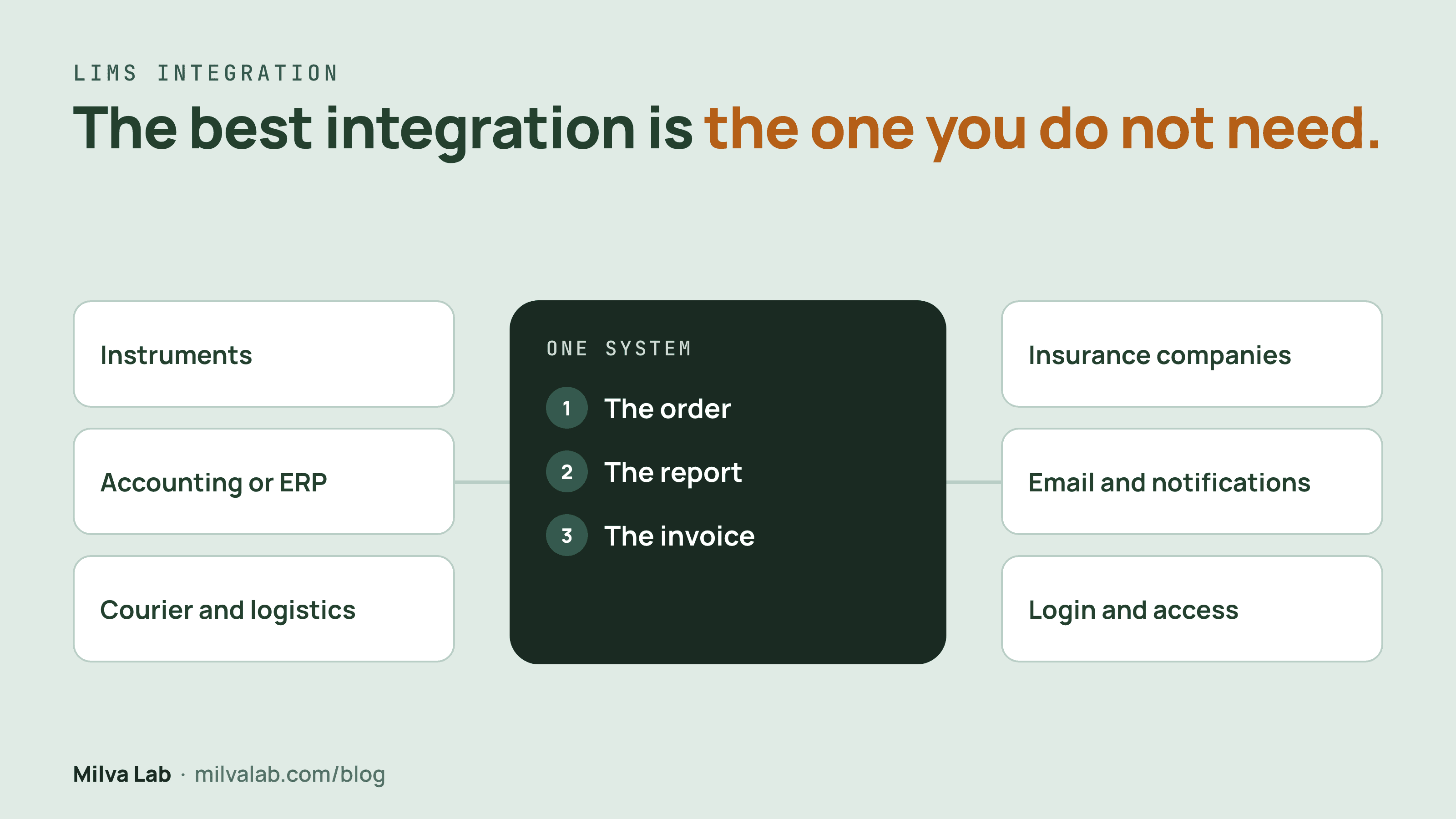
LIMS integration: what to connect and what to ask before you buy
What to connect, which integrations you can skip, and what to ask a vendor.
How to choose a LIMS for an environmental or building testing lab: a buyer's checklist
Ten questions that separate a system built for your lab from a generic one.
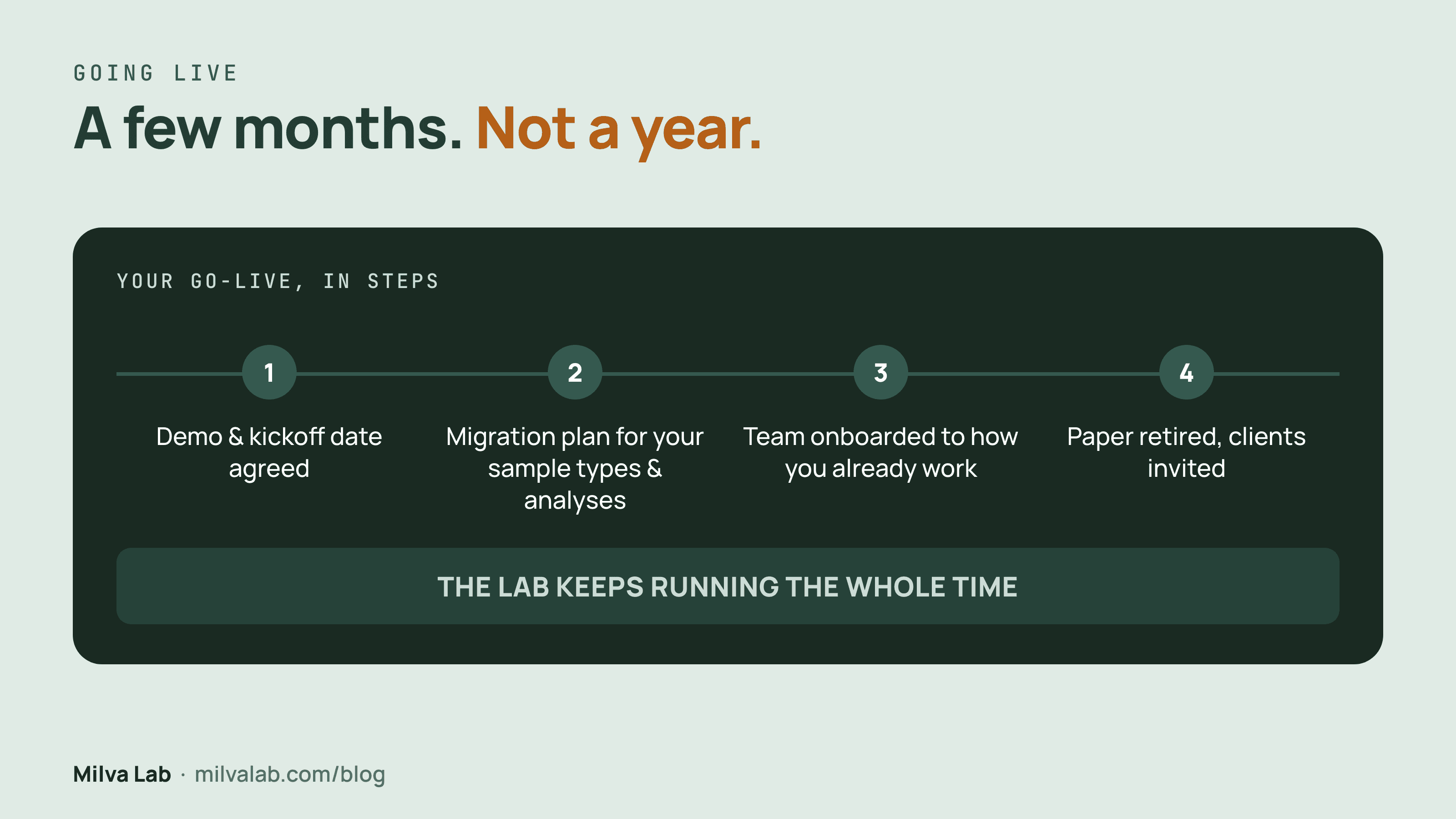
How long does it take to go live on a new LIMS?
What actually happens between booking a demo and running your lab on Milva Lab, done in steps, without pausing operations.
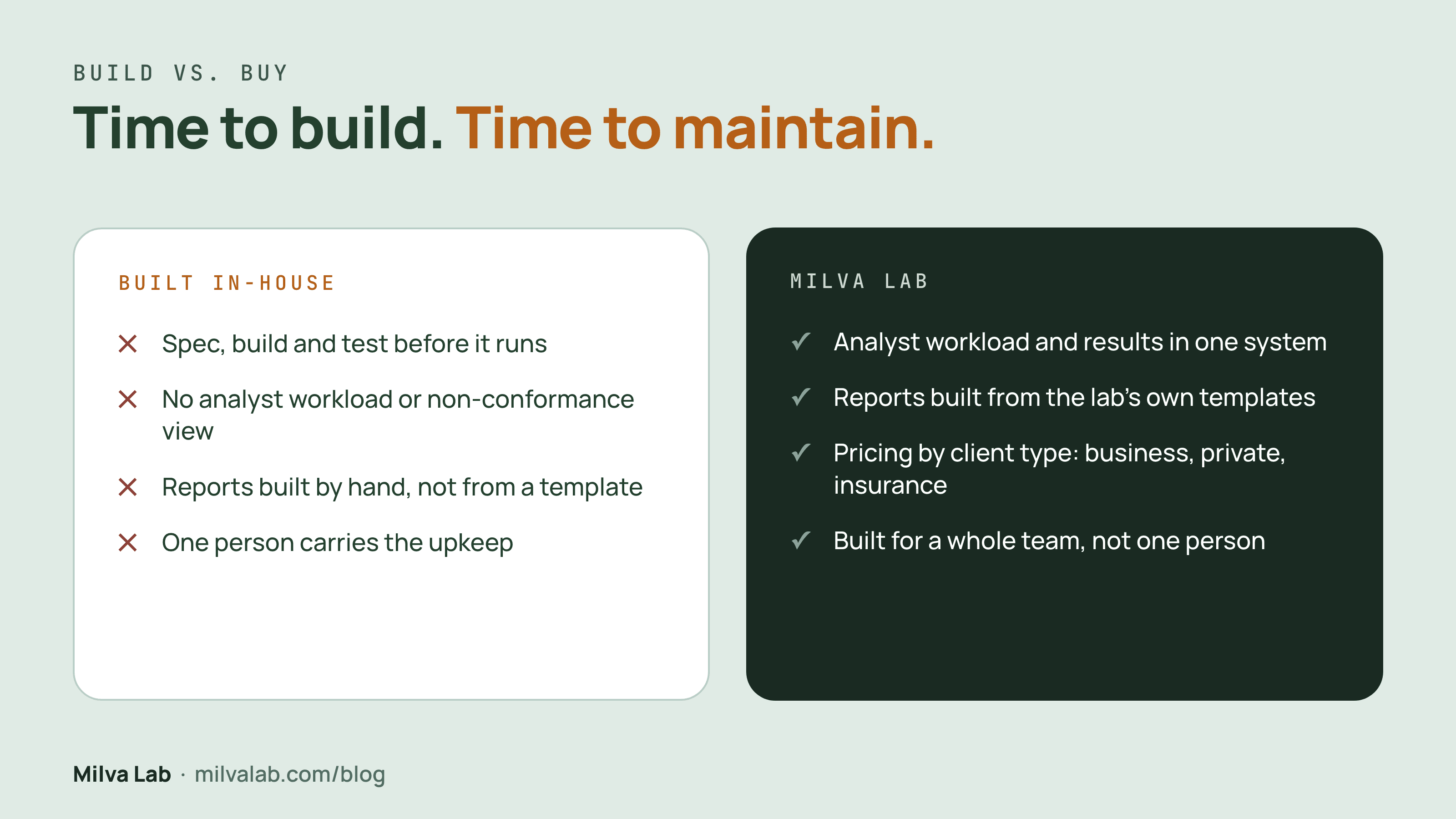
Should a testing lab build its own LIMS, or buy one?
Building a LIMS in-house, even with AI tools, still means specifying, building and testing it before it runs a single sample, time your team is not spending on the lab. Here is what that actually costs, and what a purpose-built system gives a lab instead.

Turnaround time SLAs: how labs actually hit them
Most missed deadlines are not an analysis problem. They are a visibility problem.
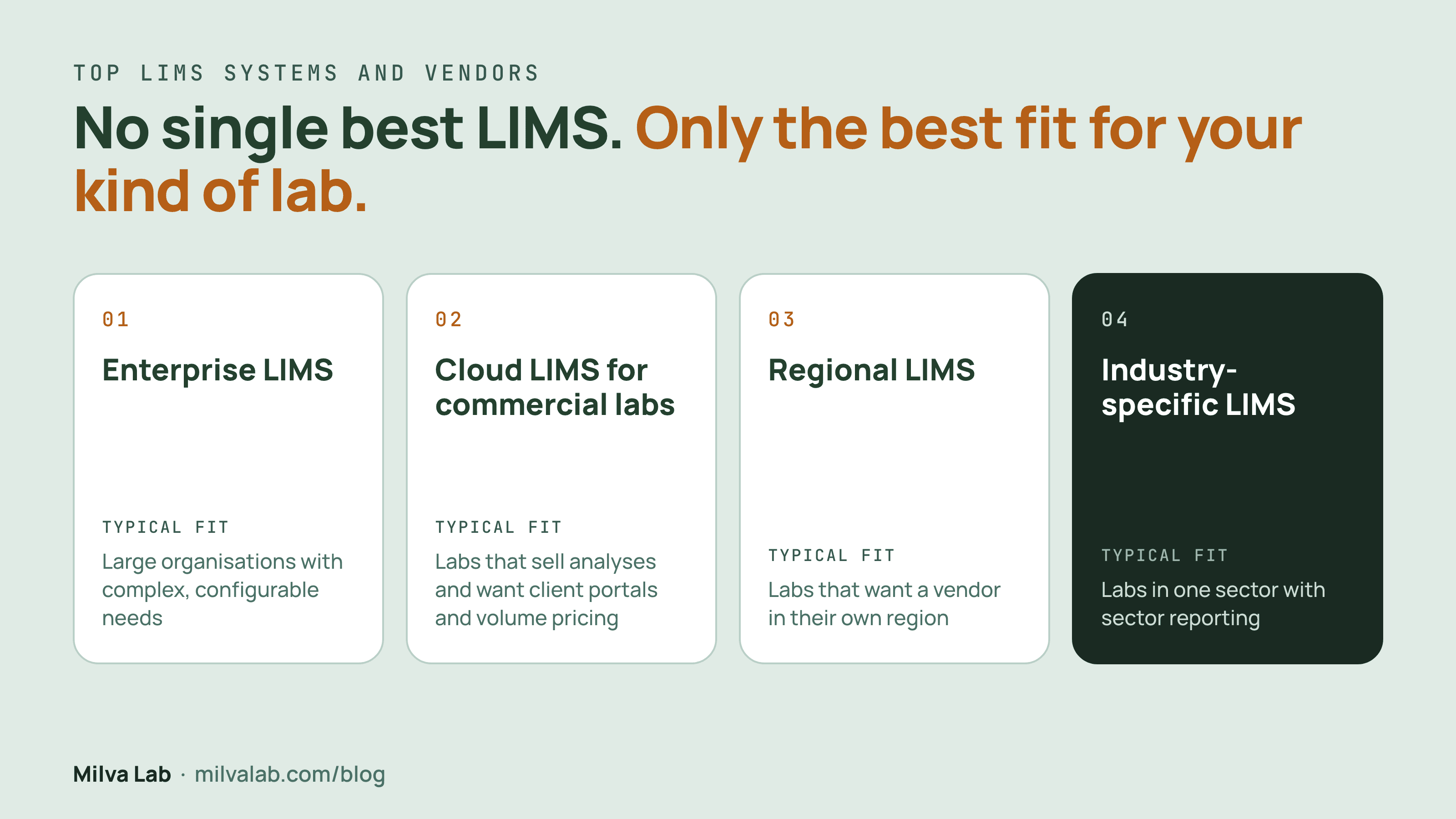
Top LIMS systems and vendors: how to build your shortlist in 2026
The main types of LIMS system, which labs each fits, and seven criteria for a shortlist.
SaaS LIMS: what it is and why labs are moving to the cloud
How a cloud LIMS differs from on-premise, and what to check before you choose one.
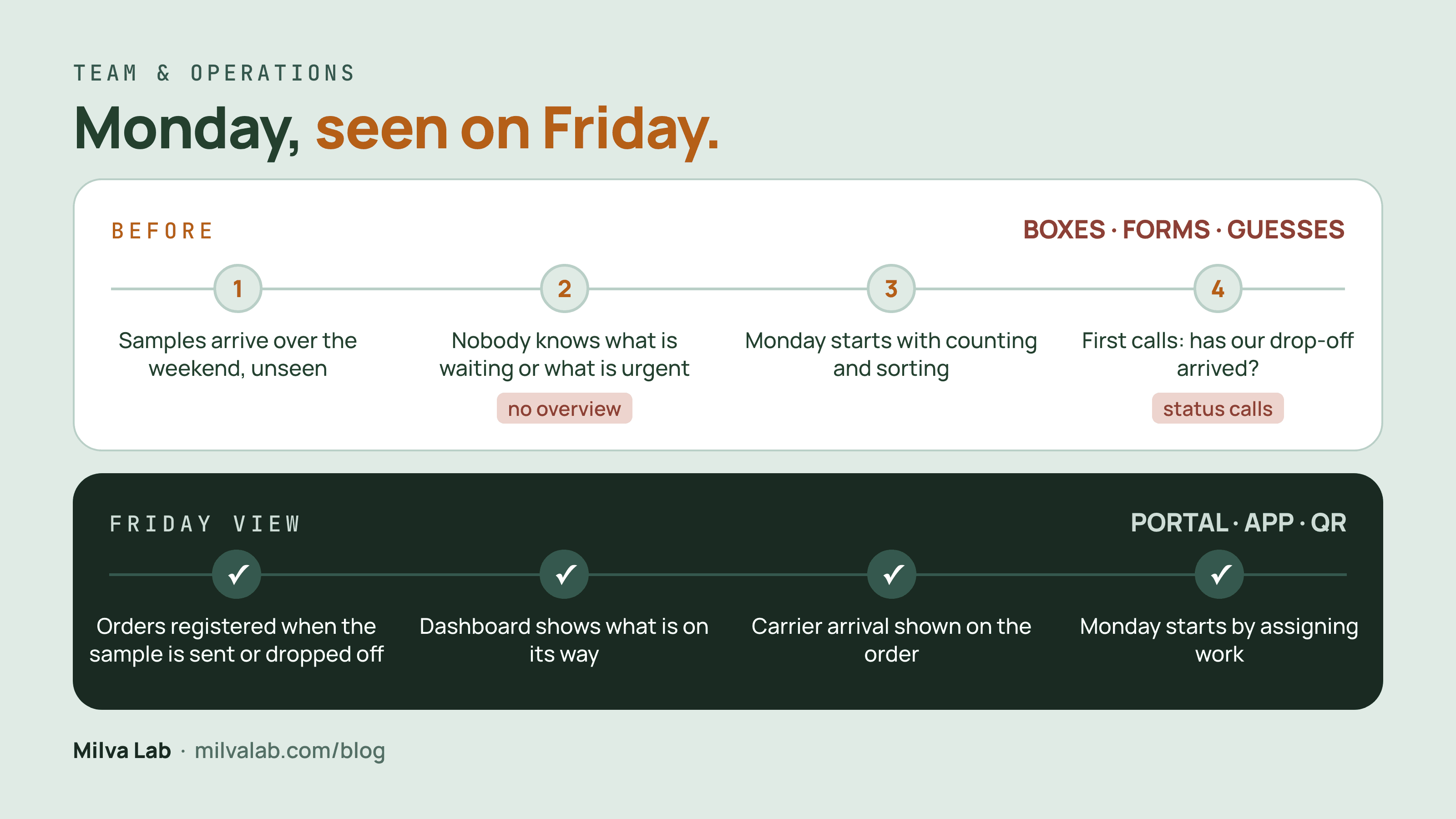
The Monday avalanche: what arrives over the weekend and how to see it before it lands
The samples are not the problem. Not knowing what is coming is.

LIMS pricing: what a LIMS really costs and how to compare quotes
The cost lines to ask about, the main pricing models, and how to compare two quotes.

A lab with more than one site: how to forward samples without losing track of them
When one site cannot analyse a sample, the sample should move on in the system, not just in a van.
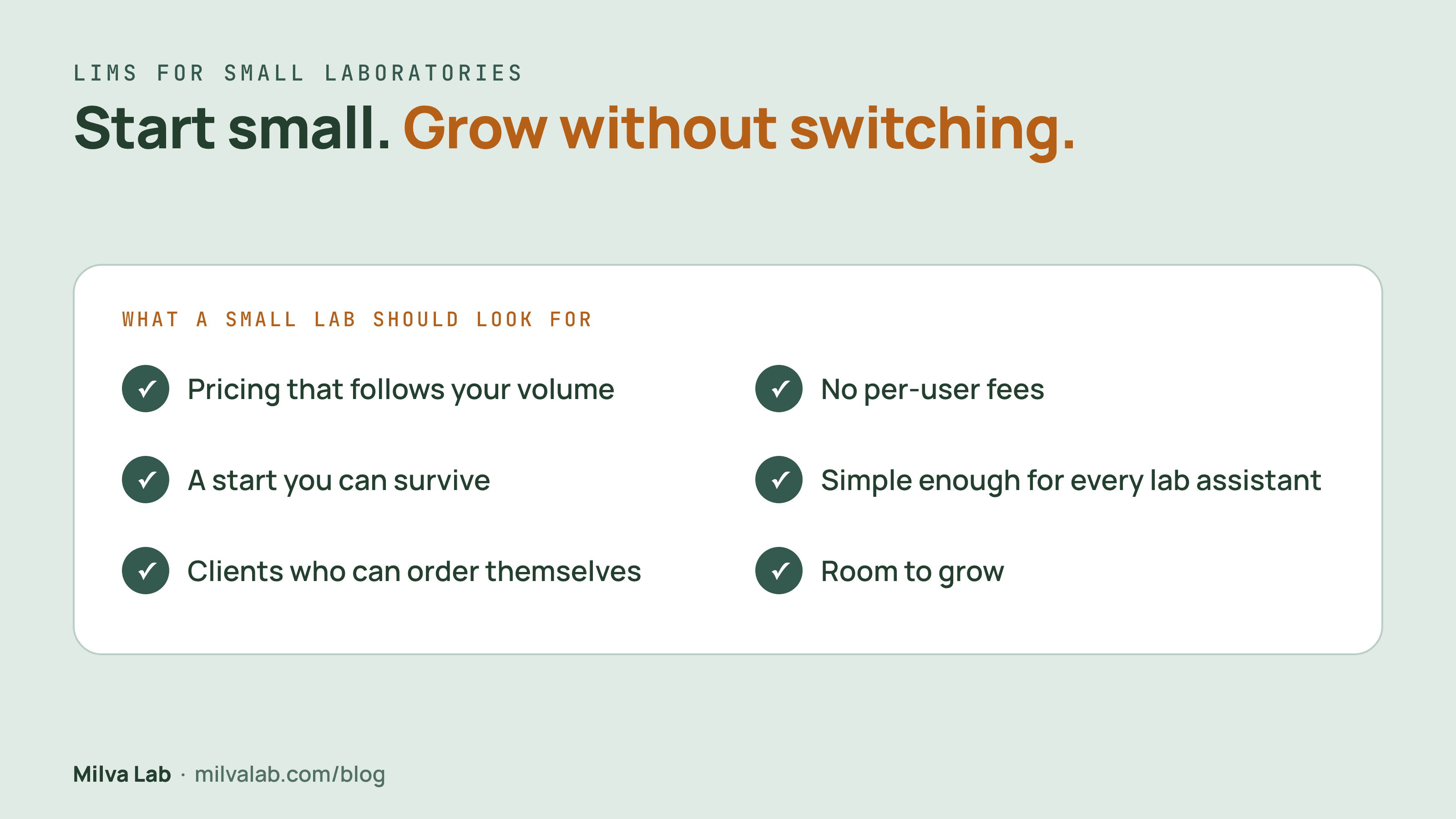
LIMS for small laboratories: start small, grow without switching
When a small lab is ready for a LIMS, and what to look for in one.
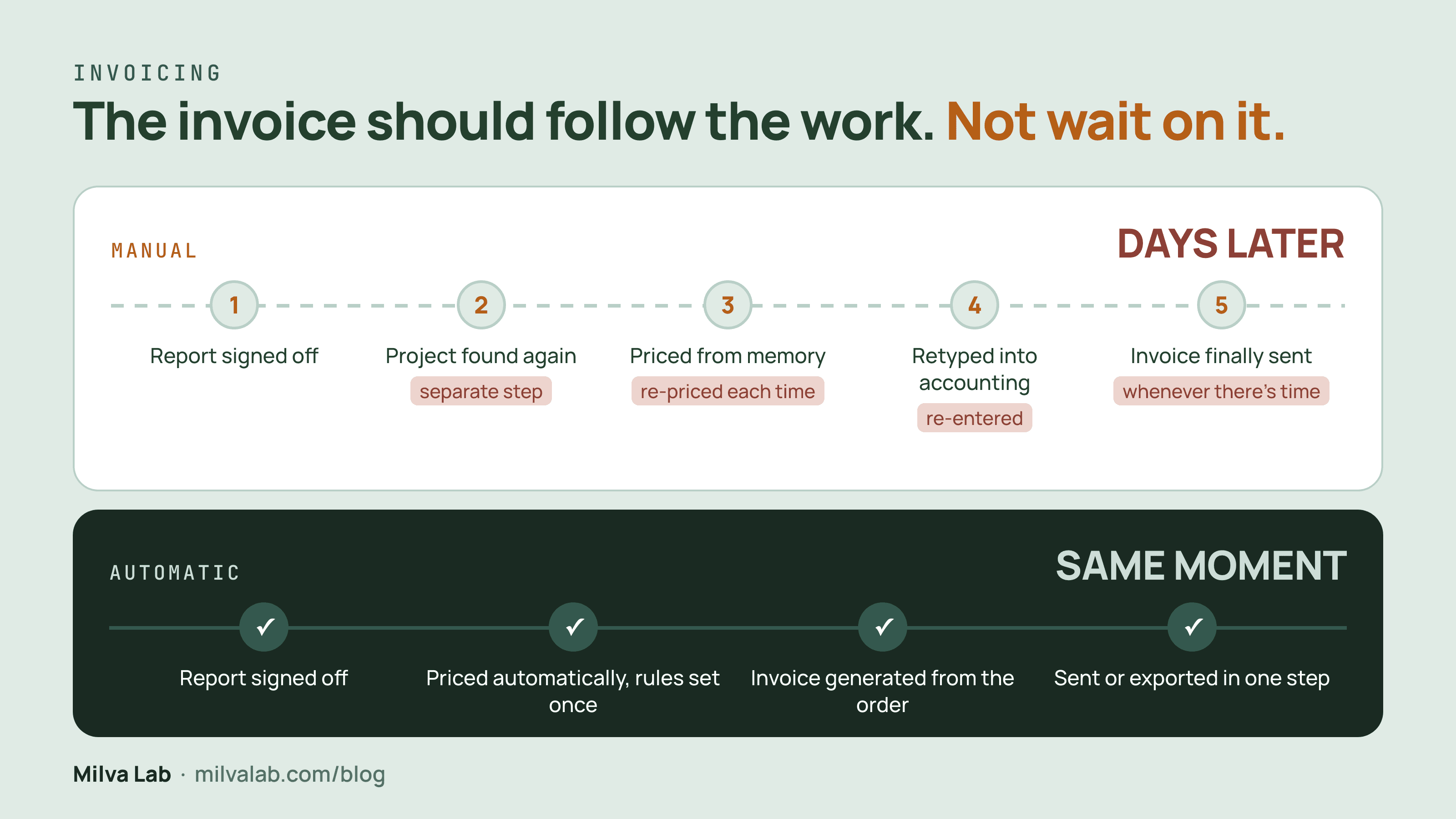
The real cost of manual invoicing in a testing lab
The invoice is rarely the problem. The gap between finishing the work and getting paid for it is.
LIMS or Excel: when the spreadsheet stops working
Excel is not the problem. The problem is what happens when five people and a stack of paper depend on it.