Blog
Reporting & Compliance
Reports, turnaround times and audit readiness decide how a lab is judged by its clients and by its auditors. This section covers how branded reports are produced from your own templates, how turnaround times are counted from real working days, and how to keep the documentation an audit asks for without rebuilding it afterwards. The focus is on environmental and building investigation labs that deliver reports to clients on a deadline and need to show how each result came about.
What this section covers
Three articles make up this section so far. One explains what a lab actually controls in a customizable report. One shows how a LIMS calculates delivery dates from working days, closed days and rush orders, so that a promised date can be trusted. One covers what an accreditation auditor asks a lab to show, and how to keep that documentation as part of daily work instead of assembling it before the visit.
They are written for lab managers, quality leads and owners of environmental and building testing labs who deliver reports on a deadline and need to explain how each result came about. If you are preparing for an assessment, or comparing how different systems handle reports and deadlines, start with the article closest to your question. The articles stay close to daily work: what to set up once, what to check before a report goes out, and what to keep so that an audit finds the answers already in place.
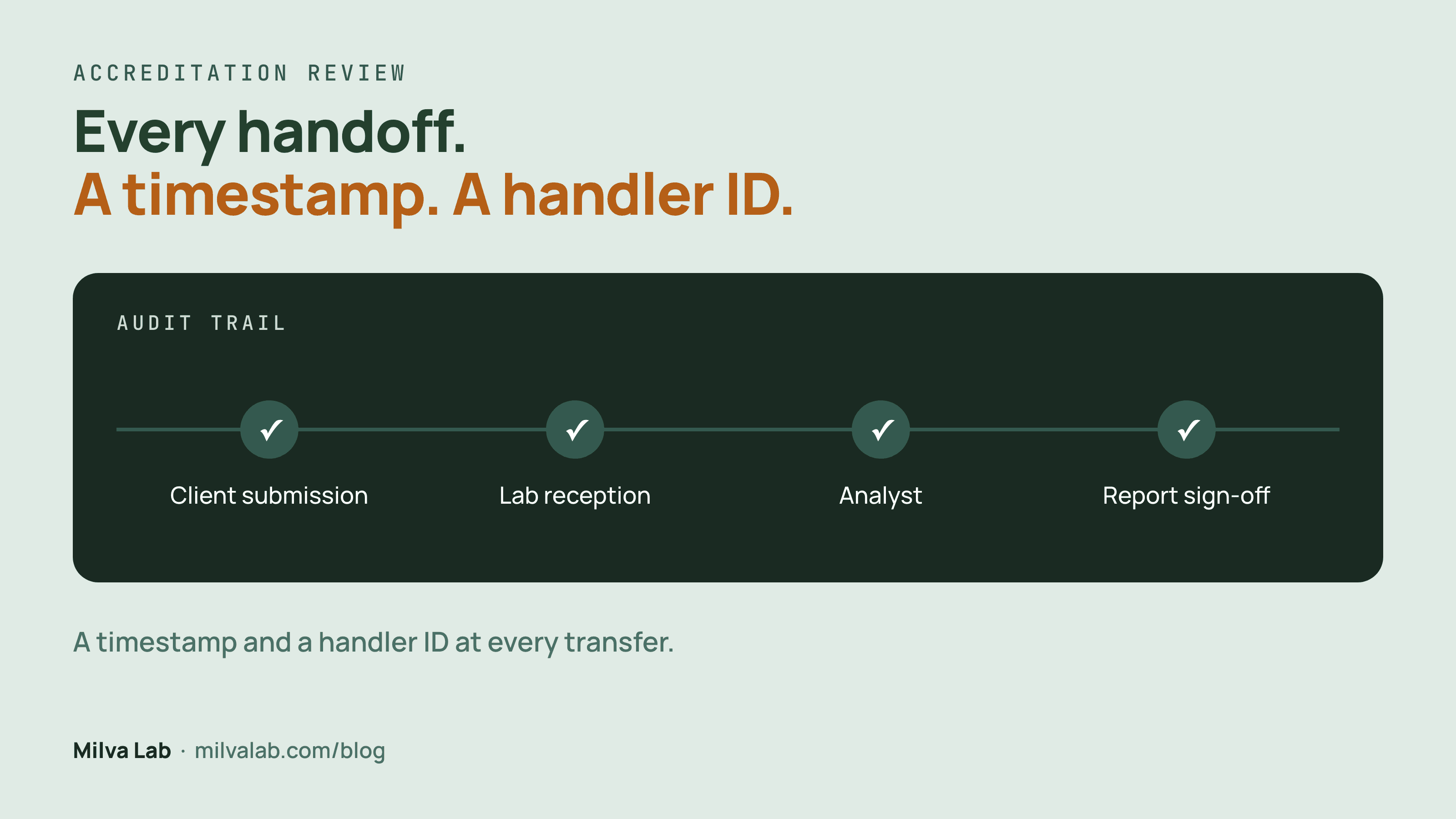
What does an accreditation auditor actually ask for?
The record a reviewer wants, and how to have it ready before the question comes instead of the night before.

How a LIMS calculates delivery dates: working days, closed days and rush orders
A delivery date a client can trust has to be counted from real working days, not from a calendar on someone's wall.
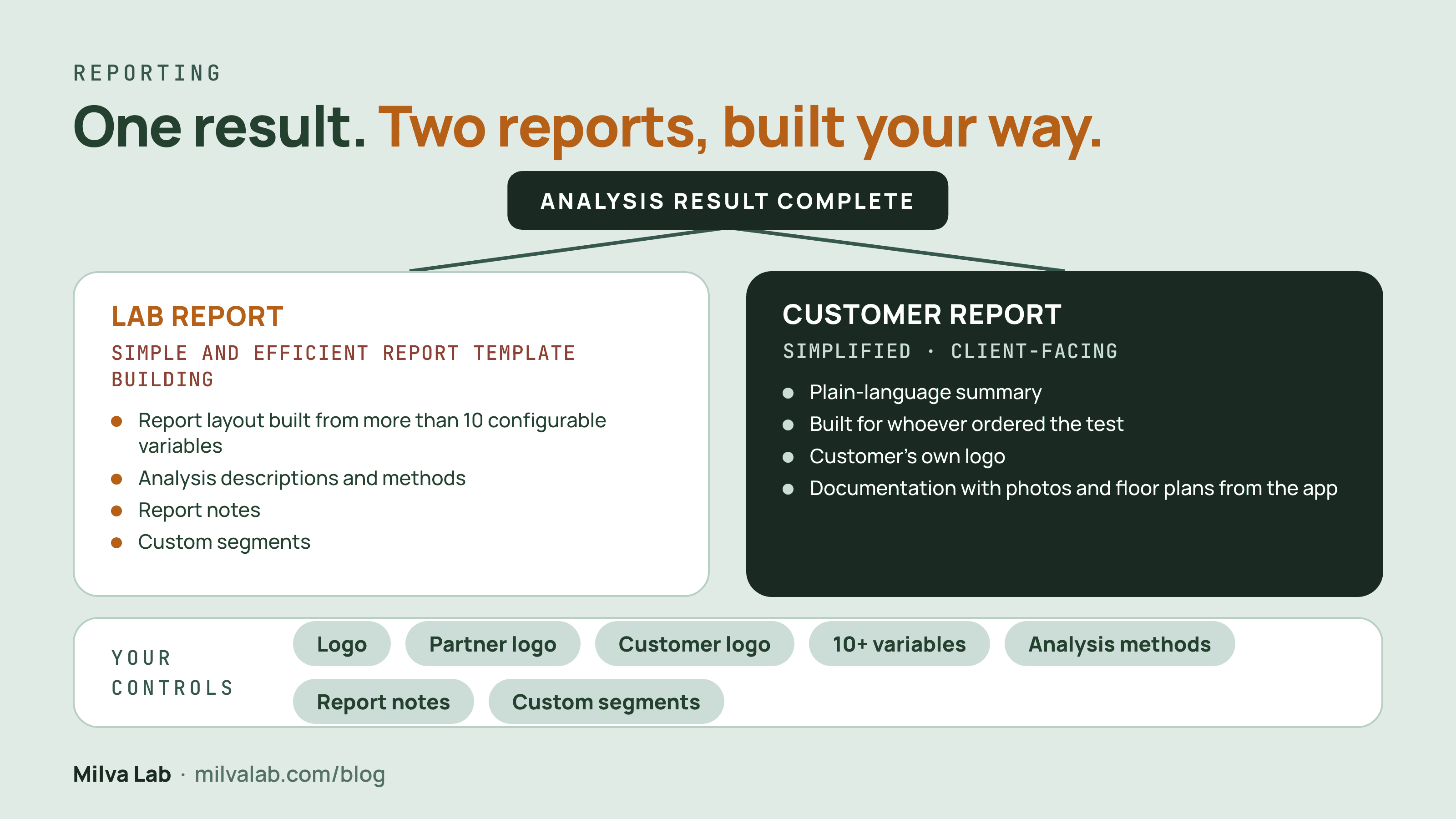
Customizable lab reports: what you actually control
A look at how a lab's own report templates control branding, naming and supporting documents, for both the technical lab report and the simplified customer report.