How long does it take to go live on a new LIMS?
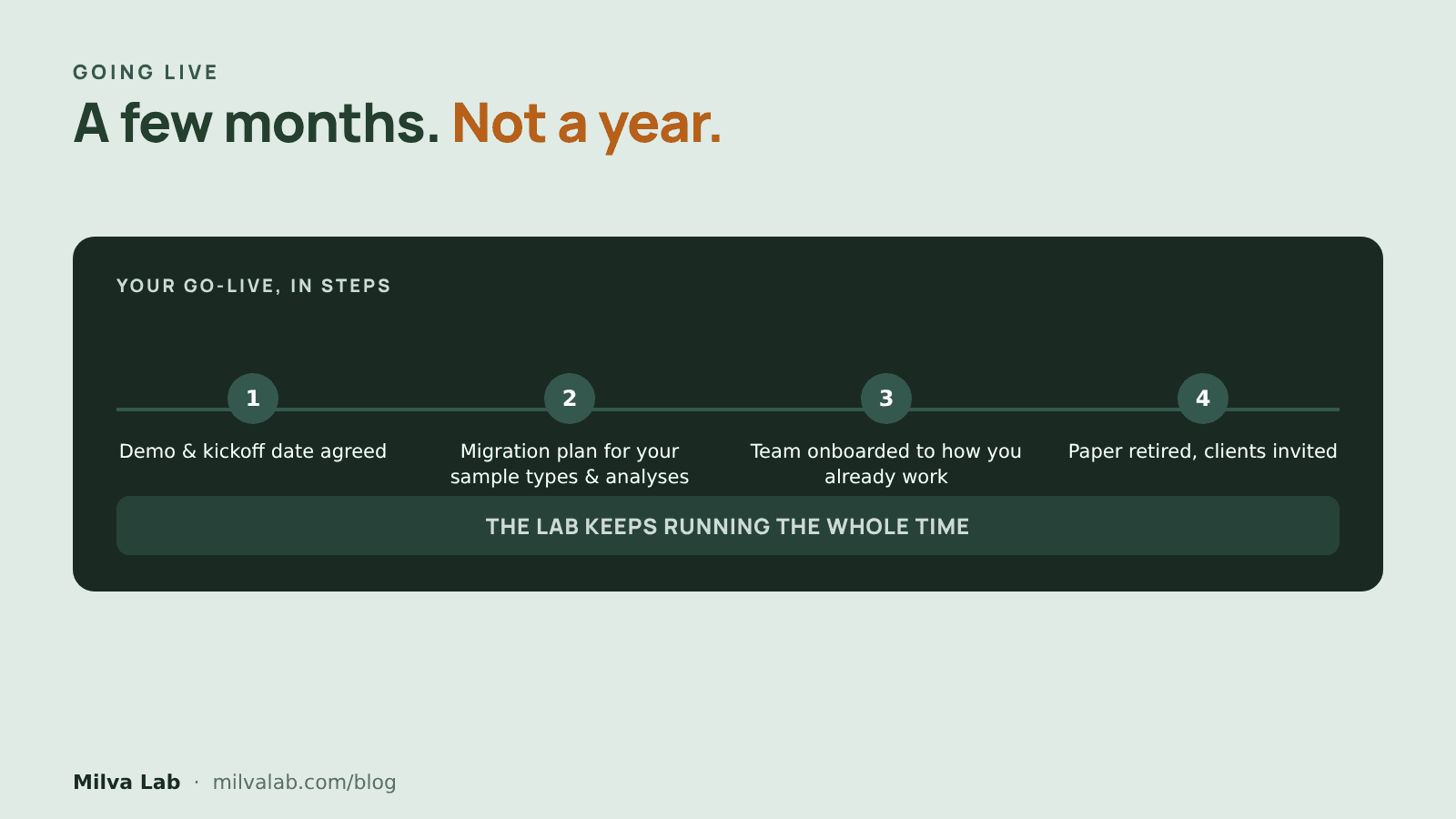
Going live on Milva Lab typically takes a few months, done in steps so the lab keeps taking in samples and delivering results the whole time. Sample types and analysis setup are migrated first, then paper is retired, then clients are invited onto the portal. There is no single cut-over day, and nothing has to be rebuilt from scratch.
A lab owner is three slides into a demo and thinking the same thing every owner thinks at this point: this looks right, but what does actually moving involve? Nobody wants to be the one who signed off on what turns into a year-long IT project, with staff pulled off real client work for months.
What does a LIMS go-live actually involve?
Going live is a sequence, not a single cut-over day. After the demo, you agree a kickoff date. From there, Milva Lab builds a migration plan for your lab's existing sample types and analyses, and onboards your team around how the lab already works. Paper requisitions and spreadsheets are then replaced by digital intake, and your clients are invited to the portal and app.
- A kickoff date agreed straight after the demo
- A migration plan built for your lab's existing sample types and analyses
- Team onboarding built around how your lab already works, not a generic rollout
- Paper requisitions and spreadsheets retired, and clients invited onto the portal and app
Why does it take a few months instead of a few weeks?
A few months is how long it takes to do this properly in steps, not a sign that the system itself is complicated. Each sample type and analysis your lab runs gets migrated and checked before clients are invited onto the portal, and your team is onboarded around the workflow it already uses instead of being handed a generic manual. The time goes into getting the migration right, not into downtime. See the Commercial LIMS service page for how the pieces fit together.
Can the lab keep running while this happens?
Yes. There is no fixed day where the lab stops taking in samples. Sample types and analyses are migrated first, then paper is retired, then clients are invited onto the portal, all while the lab keeps delivering results. Our free readiness check is a two-minute way to see where your own lab stands before you start.
The alternative is putting the decision off another year because switching feels risky, while labs that can already show live status and a documented process keep winning the tenders that get compared side by side. Going live in steps means the lab keeps delivering for clients the whole time, and when it's done, your team is running on one system instead of patching together Excel, paper and whatever the last client asked for.
Frequently asked questions
How long does it take to go live on a new LIMS?
On Milva Lab, a realistic timeline is a few months, done in steps so the lab keeps taking in samples and delivering results throughout. There is no single cut-over day.
What happens first when a lab moves to Milva Lab?
After the demo, you agree a kickoff date. Milva Lab then builds a migration plan for your existing sample types and analyses, and onboards your team around how the lab already works.
Does the lab have to stop taking in samples during the move?
No. The move happens in steps while the lab keeps running: sample types and analyses are migrated first, then paper is retired, then clients are invited onto the portal.
Is existing data rebuilt from scratch, or carried over?
Carried over. Historical sample and client records can be imported, and your existing sample types and analysis setup are migrated rather than rebuilt.
Free 2-minute check
Is your lab ready to switch LIMS?
Five questions on where your data lives, how your setup is documented, and how a move could happen in steps.

Martin Mikkelsen
CCO, Milva Lab